“Sasaeng,” or “sasaeng fan,” is a South Korean term used for an obsessive fan who often stalks and invades the privacy of Korean artists, idols, drama actors, or other public figures. The word gains its meaning from itself, where “sa” means “private” and “saenghwal” means “life” or “private life.” The Korean celebrities are no longer confined to making their appearances on television, domestic media, and magazine covers as the digital world continues to evolve. They are always under the public ecosystem where their every movement, action, interaction, expression, and even personal life is noticed. The loyal and ordinary fans are normal and always respectful and supportive towards the artists, while sasaeng fans are not.
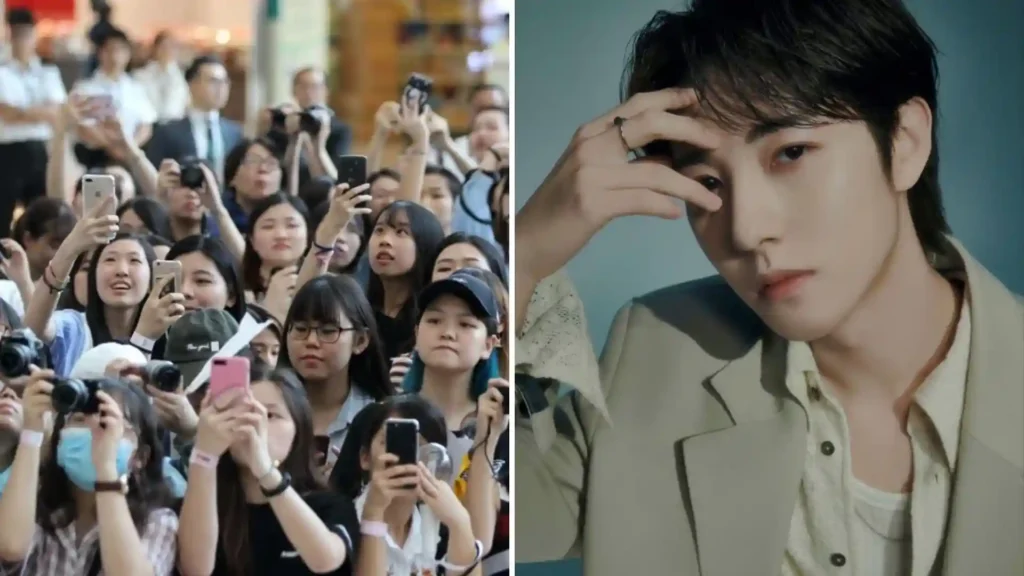
They cross personal and legal boundaries by stalking the idols for access, attention, and control. What sasaeng’s do for fun leaks personal information that can be harmful to such an extent that sometimes artists can get physically endangered. The sasaeng culture is mostly termed in relation to the K-pop industry, but the issue highlights a broader narrative surrounding the whole celebrity industry, whether it be Hollywood actors, Western pop artists, influencers, or digital creators. As the digital age is growing and continuously evolving, privacy is becoming more sophisticated and, hence, a more serious subject to be discussed. This article highlights the reality of privacy invasion and sasaeng culture and the need for a healthier fandom in the future.
Table of Contents
Understanding Sasaeng Culture and the Evolution of Obsessive Fandom
Being obsessed with celebrities is not a new phenomenon; it has been going on throughout history. As the public figures become famous and gain more audience, they naturally attract random admirers. The fans start to keep a check on idols to strengthen the emotional connection, get inspired and motivated, or fantasize about themselves through public personalities that resonate best with them.
But the modern fan culture has evolved into something crazier, as, due to the digital invasion, the fans can keep a direct check and constant connectivity with the idols. With the rise of addictive K-pop groups like TVXQ, Super Junior, and Girls’ Generation, the fans were so obsessed that they started to rent taxis, chase idols across cities, install cameras, and gain access to idols’ private phone numbers.
What made the sasaeng culture escalate was that fandom spaces normalized the stalking behavior, and some obsessive fans started to compete with other fandoms for exclusive information and private lives through stalking. But what contributed to the Sasaeng culture? The following are those factors discussed.
For You: Corporate Conflicts in the K-pop Industry
The Idol System and Manufactured Intimacy
The K-pop idol system ensures the idols develop a close and transparent bond with their fans. They stay consistent in fan interactions through livestreams, fan calls, reality shows, social media updates, etc. These make the audience feel personally connected, and they try to know more about the idols and details related to them, like favorite foods, pets, hobbies, fears, and routines.
The idol system reciprocates the illusion of friendship, and some fans even start to believe that they possess an emotional ownership of the artists. Even recent trends like “boyfriend idols” and “girlfriend idols” increase fantasies that dating rumors or relationship announcements feel like betrayal. The rumors or obsession naturally force the fandom to interfere more and stalk the idols.
Competition Within Fandom Culture
Fandom communities are just like internal hierarchies, but in the digital world. As the fans posted or found rare photos, private information, airport sightings, or insider updates, their social status was boosted, which made some sasaengs influential. This encouraged more fans to participate and provide exclusive content that is unavailable to ordinary fans. This system began to reward fandom insider culture and increase engagement, reposts, and attention towards sasaengs. The ones who criticized stalking were the same people who invested their time in either spying or consuming illegal content posted online.
The Psychological Dynamics
The fans develop a parasocial relationship that makes their attachment stronger towards their loved idols. The audience feels so emotionally connected to them, and they start to feel superior. Even though this is psychological behavior and nothing serious, just a single-sided fantasized relationship, the fans start to develop their own belief systems.
They develop feelings like they know the idols better than anyone; idols secretly appreciate them; they deserve access because I support them financially; idols’ private lives belong to the fandom as well; and so on. This mindset encourages them to interfere, stalk, spy, and spread their privacy in fandom communities.
Technology-Intensified Accessibility
The technology has developed a lot over the years, and there is no doubt that it will continue to do so. Before this era, it was really easy for the idols to disappear whenever they wanted, but now their location and sightings can be traced through fan accounts, GPS leaks, livestreams, and digital media outlets. This keeps them under a constant public eye, even when they do not realize it. Sometimes their private schedules, license plates, hotel locations, delivery records, and family-related information are also leaked. This allows the fandom communities to make guesses and spot the idols and their personal information through spying. Now, the issue has evolved from stalking into digital surveillance.
For You: How Music Companies Monetise K-pop Idols: The business of K-pop
Why Sasaeng Culture Is Often Misunderstood
While sasaeng culture is normalized among the fans, even though they don’t have any harsh intentions towards the idols, this can often be misunderstood, leading to real psychological traumas. The celebrities have raised their concern over such practices as their fear of leaving home, sleep deprivation due to senseless controversies, panic attacks, loss of trust, social isolation, anxiety disorders, hypervigilance, and so on.
Some artists have also mentioned how they have to change their phone numbers repeatedly and move to multiple residences during the same time. This feels entirely annoying, and no one knows if the haters will start using these fandom communities’ sources as a weapon against the idols. The consistent invasion conduct cannot be tolerated every time; this makes the celebrities take serious actions and lose the ability to maintain basic human boundaries.
Online Platforms That Destroy Celebrity Privacy
Social media has played an important role in changing each and every perspective of daily lives, whether it be for idols, agencies, fans, or success stories. The relationship between idols and fans has been continuously deepening through online platforms.
Social media apps like Instagram, TikTok, YouTube, Weverse, X, and other livestreaming apps increase engagement and global accessibility. Due to this, the surveillance culture has also intensified. What an idol does, who they follow, like, or promote, straightforwardly contributes to an erosion of privacy. While they do this to maintain transparency among themselves and the audience, many use this as a source of illegal activities to know secrets about them or their private lives.
The Pressure of Constant Availability
Modern fanbases expect consistency from the artists’ side so that they keep their audience updated with highlights of their lives. Celebrities also post their daily selfies, live broadcasts, personal thoughts, travel updates, and some real-time interactions as well. As they become busy or inactive on their social media accounts, the fans are quick to begin speculations or questioning about the stuff related to relationships, emotional and mental state, internal conflicts, health conditions, etc.
Many even start to spread illogical information, shifting the matter to a new perspective that is not even related to their actual concern. The rumors, inactivity, and inconsistency not only force idols to post constant stuff on their social media accounts but also encourage Sasaengs to continue their work and provide insider information to the audience.
For You: Cancel Culture in K-pop: Scandals, Accountability, and Fan Reactions
Oversharing and Boundary Collapse
All the parent entertainment agencies asked the idols to share about their personal aspects of life so that they can drive engagement through intimacy. Even if the idols are not comfortable doing so, they still share about tours, morning routines, private hobbies, and personal life confessions. The agencies do not think about the fact that how they overshare their lives, which can result in weakening personal boundaries.
The fans also start diving deeper into their private relationships, family information, home locations, unreleased schedules, and personal conflicts, ignoring how it would impact the idols. Oversharing and boundary collapse blur the thin line that differentiates public persona and private identity.
Oversharing and Boundary Collapse
Another disturbing concept includes modern fan surveillance networks that are organized online. The idols are discussed all over media platforms; the obsessive fans naturally engage themselves in private group chats, online forums, tracking accounts, flight databases, and taxi driver networks. A single hint or evidence related to celebrities spreads quickly across digital platforms, whether it be their current location or upcoming projects. Often, famous groups’ idols are crowded by numerous fans at airports; the media pushes cameras into their faces. This sometimes blocks the physical movements of idols and no doubt leads to danger.
Viral Culture
Social media algorithms play a huge role in fan engagement towards exclusive footage, “secret” sightings, dating rumors, and leaked, insightful materials. Generating and using the same hashtags over various platforms and publishing attractive content, hyping K-pop with curious yet excited information, makes it a trending and global topic.
This makes privacy an unprofitable factor, allowing accounts to gain engagement, increase followers, and earn revenues through invasive content. The audience criticizes this stalking and spying behavior, but at the end of the day, they find themselves getting attracted to such content.
Digital Harassment, Psychological Pressure, Livestream Culture, and Emotional Dependency
Apart from physical stalking, the idols also face relentless harassment as the fans spam personal accounts, send threatening messages, monitor interactions, and analyze friendships obsessively, creating their own fantasies related to them. There is no doubt that celebrities receive thousands of related messages daily. Female idols unintentionally get involved in dating rumors, body scrutiny, and misogyny; as a result, they get harassed.
While male idols face online harassment for concepts related to masculinity and relationships. Live streams also escalate unhealthy attachment style, where fans start expecting emotional availability on demand. When the idols fail to do so, backlash occurs.
Psychological and Emotional Impact on Celebrities
The audience becomes so attached to the lives of celebrities about luxury, glamour, and success, hence indulging in constant surveillance of them. Eventually, it becomes a habit for them to look after idols. For idols, it feels like a burden as they cannot even fully relax or roam in public places, as they can face intrusion at any moment.
Anxiety and Hyperawareness
As discussed, stalking creates fear among the victims; they have to maintain proper security to leave their home, post stuff, answer unknown calls, or even interact with friends and family members. For the audience, it is just an ordinary list of activities, but the way such activities are spotted and turned into rumors or scandals can cost heavy losses. Many idols have discussed how they found hidden cameras in hotel rooms and how they fear interacting with strangers who refer to themselves as their fans. All the activities can lead to anxiety due to their side effects.
For You: Mental Health Crisis in the K-pop Community: The Dark Side of The K-pop Industry
Sleep Disorders and Exhaustion
Sasaeng behavior is not limited to daytime; it continues till late at night, as fans often start calling or spamming at the phone numbers once they identify idols’ identity numbers. Many wait outside their houses for long periods, follow vehicles, or even send deliveries. This affects them as it disrupts the sleep and recovery times of the idols. They already have hectic working days, and sleeping disorders cause more exhaustion and poor mental health issues.
As the idols have two personalities, a public identity and an authentic private self, once their privacy disappears, it becomes so difficult for them to maintain separation. Also, some idols consider it important to keep their actual personal identity hidden, as their transparent opinions, emotions, or insecurities can cause backlash, risking their future careers.
Loss of Trust, Depression, and Emotional Burnout
The sasaeng culture and invasion of idols’ privacy cause idols to doubt others and be unable to trust others. Though celebrities develop an identity to question new friendships, romantic relationships, staff loyalty, and public interactions. Leaking of information repeatedly leads to the development of paranoia, and that is natural, but it can cause negative impacts on the idols’ future.
The tragic deaths of some K-pop idols like Sulli and Goo Hara have highlighted how invasive online content leads to bullying and bullying to mental health distortion for the idols. The most crucial aspect highlights dehumanization. Fans do not understand that the idols are also normal human beings with feelings, trauma, insecurities, and illnesses just like them. They are not products but the same people as the audience who deserve equal privacy as they do.
Real Cases of Sasaeng Behavior and Industry Responses
The K-pop industry is almost full of numerous case studies in relation to the dangerous sasaeng culture, which clearly reveals how the culture can cause something serious to happen. Let’s study, analyze, and identify them.
TVXQ: Case Of Extreme Stalking
During its peak, the members of TVXQ faced a major backlash as the group suffered from internal conflicts. The news spread among all the K-pop fans, and according to the news forums, the audience broke into dormitories, tracked idols’ schedules, and even installed hidden cameras. What was just an internal conflict between the members and the agency became so serious that the fans shared disturbing letters written in blood. This highlights the normalization of invasive fandom behavior.
EXO and Dormitory Invasions
The next incident includes EXO, when the group faced fear and exhaustion due to the leaked information about the group’s members’ appearance. The fans went so crazy that the hotel was filled with their fans, fans followed members on flights, phone numbers were leaked, and members were continuously chased by vehicles at high speeds.
NCT and Real-Time Tracking
The NCT members openly shared about the sasaeng culture and highlighted the importance of having a one-to-one conversation, as it can result in harming the idols. They shared their own experience when their fans stalked them, spied on them, and purchased their flight information to monitor the schedules. The members came forward publicly to request the audience to keep the fan-idol boundary, as they cannot always be available for the fandom; they have their own lives too.
For You: Role of Social Media Algorithms and Trends in the Popularity of K-pop and Idols
Female Idols and Harassment
Female K-pop idols face immense scrutiny when they get involved in dating rumors, appearance policing, misogynistic attacks, and sexualized surveillance. The major examples include members of female idols’ groups like BLACKPINK, TWICE, and IVE, who faced online harassment for being included in inappropriate song lyrics and dating rumors. The idols had to face a major backlash just because of sasaengs, who often share information and make the audience misinterpret the actual narratives.
Legal Protection, Ethical Challenges, and Industry Reform
To this group, agencies have always tried to secure the privacy of idols with common responses, including legal actions, blacklisting offenders, enhanced security, airport protocol changes, public warnings, and mental health support. Still, due to inconsistency and increasing sasaeng behavior, the situation has not changed much. Even a few entertainment companies do not confront and let it happen, whatever it may be, as they are afraid to lose their audience, moreover, to confront them.
With an increase in such cases, the government and many entertainment companies came forward so that strict legal rules could be implemented to protect the entertainers. Anti-stalking laws have been established in legislation; companies have modified the rules and adopted strict artistic safety rules, and even many loyal and healthy fans have contributed to stopping stalking culture.
The future of K-pop entertainment still depends on a deep bond between fans and idols; however, this does not mean that the idols should sacrifice their basic human rights. There is a need for maintenance of meaningful fan relationships rather than toxic ones, which disturb one’s mental health.
For You: CIX Virtually Disbanded After 7 Years
Conclusion: Hidden Cost of Fame in K-pop
Privacy invasion and sasaeng culture reveal one of the darkest sides of the entertainment industry. Behind the glamorous stage performances, viral trending choreographies, fashion, and attractive visuals lie the challenges that idols have to face, a troubling reality where they cannot even have direct access to their personal lives. The increasing parasocial relationships, digital platforms, oversharing, and fan surveillance communities all contribute to sasaeng culture.
The fans stalking and keeping a check on the idols shows how fandom can cross ethical lines and cause harassment, mental health issues, psychological consequences, and sleeping disorders. Anxiety, burnout, isolation, and distrust are not just side effects but serious issues that need to be prevented. The legal authorities, and moreover, the entertainment companies should always make sure that idols are given the space to live their own lives by implementing strict rules and regulations that cannot be denied, and if denied, the punishments should be harsh enough that such activities would not be repeated in the future.
Frequently Asked Questions
Who is the most expensive K-pop idol?
The most expensive or wealthiest among all the K-pop idols is Kim Jaejoong (formerly of TVXQ and JYJ), with an estimated net worth of $100 million. He achieved his massive wealth through music, acting, founding his own agency (iNKODE), and highly successful real estate investments.
Who is the No. 1 K-pop idol?
While “number one” is highly subjective and varies by metrics like streaming, social media reach, fan following, or brand influence, Jungkook and V, or Kim Taehyung from BTS, and Lisa from BLACKPINK are widely considered the top K-pop idols globally.
Who is richer, Jungkook or V?
V is considered the richest member of BTS, with an estimated net worth between $40 million and $45 million, compared to Jungkook’s net worth of roughly $35 million to $40 million. While their wealth fluctuates with new music, endorsements, and stock value, V still maintains a slight edge.
How did IU become famous?
IU became a national superstar in 2010, after the release of her hit song “Good Day.” The track’s massive success and her iconic three-octave high note catapulted her to fame, earning her the affectionate title of “Korea’s Little Sister.”
Is K-pop big in India?
Yes, K-pop is extremely popular in India, particularly among young adults and Gen Z. Driven by streaming platforms, K-pop listenership has surged over 300% in recent years, with megastars like BTS, BLACKPINK, and EXO drawing massive, dedicated fandoms in India.