The K-pop industry was never totally dependent on music alone. Despite its catchy music styles and high-power choreographies still being one of the important aspects in the industry, modern K-pop thrives mainly on a mix of both concept branding and dedicated, glamorous performances. And so, the agencies and parent K-pop companies have designed a well-structured system that transforms the idols from being the members of groups to the cultural products in order to establish a strong place in competitive communities.
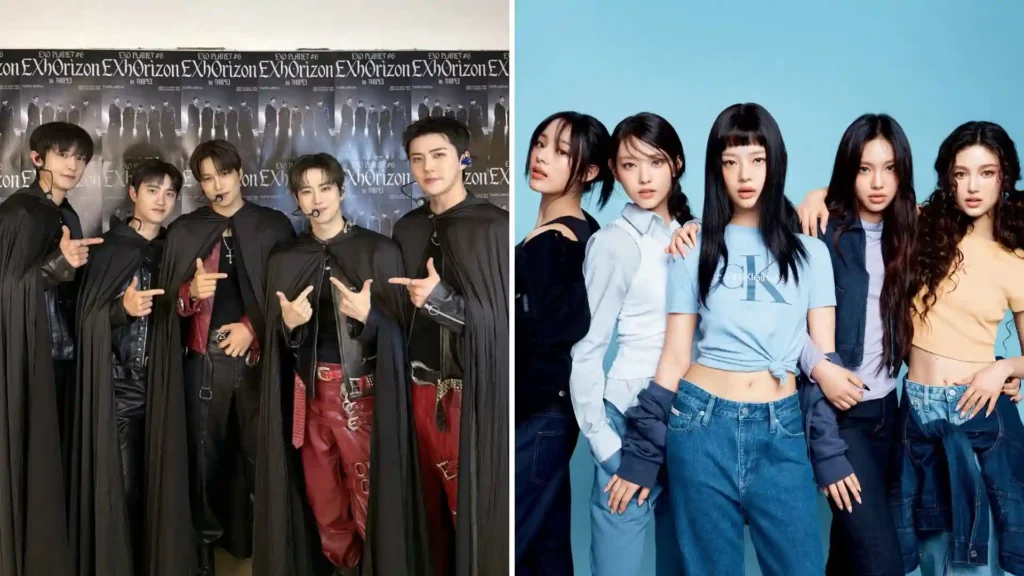
K-pop has used the strategy of concept branding in such a strategic way that it has become a powerful marketing tool in the Korean culture. This encouraged the agencies to continue their experiments that they have been doing and succeeding in for decades. Now, the Korean entertainment industry has started to develop fictional universes, lore systems, and AI-generated digital identities rather than just focusing on distinct music videos. Groups like EXO, NewJeans, Easea, Mpreg, and BTS are perfect examples of the concept of marketing that is evolving with technology in the Korean community. These strategies have also been the reason for several controversies and immense debates that are held online.
Table of Contents
The Beginning Of Modern Concept Branding in K-pop
Before K-pop gained worldwide recognition, the concept of branding was straightforward, as the groups were known for their basic themes like “cute,” “rebellious,” “sexy,” etc. Similar music styles were published, and thus the groups were classified. For example, K-pop first-generation groups like H.O.T. and S.E.S. were highly listened to by the audience who demanded simple cultural music styles and public personas. They did not anticipate themselves in any complex storytelling, and at the debut of these groups, the audience appreciated them a lot.
Gradually, during the second generation, new experiments by the companies resulted in the development of famous groups like Girls’ Generation, BIGBANG, and SHINee, which came to be known for their distinct styles. Even by this time, it was ensured that consistency and wide variety are the keys to keeping the audience engaged and setting trends. Not only did it evolve the audience’s taste in music and concepts, but it also associated them with popularizing the Korean fashion and luxury image.
Despite the struggles and dedication of management teams to enhance their impact and discover new concepts for their fans, the concepts were limited. Also, the concept branding marked its place only during the comeback periods when new visuals and themes were adopted by the idols and interconnected to their original themes. The Korean entertainment industry wanted to transform itself into something worldwide; it made many efforts to evolve and globalize, but it did not use social media platforms where the population was huge in numbers.
After it analyzed and decided to start promoting their idols and K-groups, the rise in the K-pop model was noticed. The influence of Korean culture, with the help of social media platforms, increased the engagement of the audience of Asia with itself. What was needed by the idols to set them apart from Western markets and break the barriers to reach internationally was a strong branding idea, a conceptual branding that could be understood and noticed by everyone around the globe.
The agencies decided to shift their approach from cultural music performances to ongoing trends modified by Korean culture. Eventually, visual storytelling techniques, fan interactions, and symbolism were added to the music to become competitive and build something much stronger across the globe. The main initiative for the evolution surrounded SM Entertainment, which experimented with conceptual branding through groups like SHINee and f(x), but the groups didn’t perform well in marketing. EXO, which also debuted under SM, aced the field by becoming a full lore-based K-pop group in history. Fans were drastically engaged through EXO’s identity, the interactions it made with fans, and its promotional strategies.
Now, fans were curious about Korean music, as they appeared to be distinctive, and wanted to decode the narratives behind it through storytelling techniques. The industry soon realized it was the perfect time for reestablishing the concept of branding.
For You: Top 20 K-Pop Scandals Of All Time: Controversies That Shook The Industry
Rise Of EXO and Lore-Based Branding
EXO instantly gained attention and stood out among all the bands and idols in the Korean as well as international market, the reason being its unique conceptual framework designed by SM Entertainment. The group did not develop simple music like others; in addition, they developed fictional characters that possessed unrealistic or supernatural powers representing various elements.
- Suho represents water as the source of life.
- Xiumin represents Frost as the ability to freeze objects.
- Lay represents healing, the ability to heal.
- Baekhyun represents light that controls light.
- Chen represents lightning/thunder that controls electricity and thunder.
- Chanyeol represents Fire, which controls fire.
- D.O. represents Earth/Force as the ability to control the ground.
- Kai represents teleportation.
- Sehun represents Wind, controlling the wind.
- Kris represents flight as the ability to fly.
- Luhan represents telekinesis as the ability to control objects.
- Tao represents Time Control as the ability to stop time.
The music group, consisting of science fiction and visuals, which were nowhere else seen in the market, was an attractive thing for the audience. This was where the K-Pop started rising, and the agencies did not even hesitate to look back again. Some of the core reasons for global engagement were resistance to language barriers due to interactive storytelling methods, mythology, and parallel worlds.
Eventually, SM and its management team grabbed the secret behind digital engagement’s usage in revolutionizing the Korean entertainment industry. Through being consistent in its digital presence, it excelled at branding while creating a deep emotional relationship with fans. The audience found it fun to engage themselves in solving clues across websites, finding and analyzing hidden secret messages, and viewing promotional material linked with the group’s upcoming music videos.
For You: Globalisation of K-Pop and the Rise of the Korean Wave (Hallyu)
EXO became a role model for countless groups that developed after it as the members set an example for everyone to popularize through investing in the lore itself rather than sticking to music videos, songs, and performances. Groups like LOONA, ATEEZ, and TXT, after getting inspired, adopted similar storytelling strategies in order to connect themselves with global markets.
Effective and unusual storytelling structures improved branding and increased longevity throughout K-pop groups’ journey. Despite being on hiatus, fans continue to discuss and revisit the inventions of idols. This gave rise to strong parasocial relationships and strengthened the bond between the audience and group members.
Social Media and the Expansion of Branding Culture
After EXO and inspired groups came into the industry, the expectations of the audience changed. Now they demanded more such complicated visuals and concepts rather than temporary, come-back changes. Even so, there’s no doubt that social media platforms emerged from the idea of expanding branding culture. Platforms like TikTok and Instagram began to dominate the entertainment charts, inspiring Korean agencies.
For the K-Pop community, it was a useful method to grow their influence beyond television appearances and Korean music shows. The idols started to interact with their fans consistently and increase their following through algorithms. Also, this strengthened the industry’s way to announce a comeback with emotional warmth.
Apart from enhancing their influence and delivering consistent content to the fans to keep them engaged, this approach helped the industry to feature their idols as brand ambassadors for promoting various brands. Influencing K-pop culture through different global brands intensified the impact of the industry on idol culture. This made it possible for South Korea to gain greater visibility while creating a cycle where its idols continue to dominate global markets and online platforms.
Groups like BTS gathered an audience through their emotionally driven branding strategies by promoting youthful and self-growth concepts. While BLACKPINK came to be known for fashion and global celebrity culture, with its luxurious branding structure. This allowed them to monetize on a global level through entertaining partnerships with various MNCs and expand their individual concepts into virtual concerts, web tools, merchandise, NFTs, and franchises. This was the beginning of modern K-pop when online communities started to shape the industry and its development. Through social media more audience could be reached, and their views were reflected in the upcoming K-pop groups.
For You: Why Girl Groups Are Dominating K-pop’s New Era (2023-2026)
As the branding focused on experimental concepts, many of them were what the fans wished for; this approach allowed the artists to engage more of the audience and made their loyal fans feel heard. Apart from this, the online environment was also intensified as many controversies and debates started to take place. The fandoms were divided. They are quick to analyze and compare the concepts being brought.
Many criticisms surrounding the accusations of plagiarism and similar design details surfaced online, where new groups or other cultural bands were blamed for copying already established concepts. This pattern highlighted how the K-pop industry’s branding found its place and developed into a constant cycle where innovation and evolution were respected at its peak.
Aespa and the AI Avatar Experiment
Aespa was responsible for pushing the boundaries and entering the global markets physically. After EXO experimented and made lore-based branding a casual topic among the idols, aespa took a step further into digital identity and experimentation. Just like EXO, aespa too was an idea of the SM Entertainment agency, which wanted to introduce something more ambitious and an uncommon theme in the history of K-pop so that it not only inspires the outside world but its loyal audience in Asia can have a similar effect as well.
As the name suggests, “aespa” brought the use of AI and made unique AI avatars that belong to the digital world. This digital world was connected to the “KWANGYA” universe. Such a productive use of AI made it more interesting for the audience to stay connected and align their daily lives with one of the most popular interests, the metaverse, AI, and virtual idols.
This concept excited the people and made them more curious about how exactly the branding and concepts would take their place. An enormous amount of curiosity was generated; even the competitive companies were surprised to see such an invention. The high-quality visuals and same capabilities as humans hyped SM’s reputation, marking one more valuable experiment of the K-pop industry.
This strategy attracted many branding and marketing opportunities for the entertainment agency, fueling the rest of its powered groups. While the concept of using AI in fields of entertainment was appreciated by much of the audience, critics were also spotted. The unrealistic beauty standards and hypersexualized digital representations raised several serious questions about the idea of innovation, as it influences and specifies a negative concept of body images and perspectives among youngsters.
For You: ADOR vs. Danielle Case: What We Know Till Now
The Role of Fanfiction Culture and “Mpreg” in K-pop Branding Discussions
Recently, another quirky concept paved its way in the K-pop industry, regarded as “Mpreg,” which involves marketing fandom-based narratives. While this began as a recurring theme in fanfiction, MPREG became a major topic of conversation in many mainstream fan communities. It showcases a totally fictional concept where it is depicted that males can also conceive and give birth to babies. It is a rookie act that is built around the idea of male pregnancy. One of the crucial places where a similar concept appears is within the omegaverse subgenre, a fictional universe.
After EXO, BTS, NCT, etc. became common for their concepts in the industry, K-pop found a new way to surprise everyone with its bold concept of mpreg, which was common and only noticed in anime and alternative universes. Linking the concept to music and entertainment through a distinctive approach was a new branding idea; also, it developed a genuine appreciation among the audience for the K-pop industry’s imaginative worldbuilding. Despite introducing something uncommon with all good intentions, the concept of branding, surfacing the theme of mpreg, covered dual reactions. It soon became a topic of major concern and a controversial topic.
While some considered it to be a bold step towards breaking traditional gender norms among the audience, and a perfect example for artistic experimentation, others criticized it for feeling the theme to be unnecessary and uncomfortable. It can lead to the potential misuse of sensitive things just for gaining attention. Some believe that such a concept can create confusion between artistic symbolism and interpretation and even risk the music itself, as well as blur the line between fantasy and reality.
For You: Mental Health Crisis in the K-pop Community: The Dark Side of The K-pop Industry
This approach was a direct fan narrative’s wish fulfillment, but the branding strategy did not go well. The fanfiction could have gathered more appreciation if the concept had been used to cover prominent topics related to pregnancy rather than linking it with the music industry.
NewJeans and the Rejection of Traditional Idol Branding
While NewJeans’ debut era was not marked for instant success, it was labeled as a completely disrupted 4th-generation K-pop group that had ridiculous branding skills. The period was known for lore-based systems, hyperactive and stylized visuals, and high-quality cinematic videos. On the other hand, NewJeans had an opposite approach to marketing.
It believed more in simplicity, realism, and nostalgia instead of complex storytelling and “girl crush” concepts. For the audience that always engaged themselves in the new and bolder concepts, Y2K fashion was something full of excitement, as they could again come back and feel an old casual cinematography with understated makeup choices.
The strategy was unconventional but thoughtful, as everyone began surrounding themselves with new ideas and was trying to develop a new concept using AI and evolving technology. ADOR tried to come back to the basics of the industry and create something full of curiosity from organic Korean culture. Gradually, this conceptual approach retained the old audience of K-pop and found itself in the middle of applause, where a global audience was connected to cultural and traditional values. The branding was more refreshing compared to other complex structures and came to be known for its authenticity as it appeared natural, charismatic, and casual. This effortlessly allowed the idols to preserve their place all over the Korean communities.
The Future of Concept Branding in K-pop
As per the analysts, the future of K-pop conceptual branding will be more dependent on evolving technologies and newer digital structures that are being introduced day by day. The Korean companies are always in front to view, notice, and make use of technologies in an appropriate way that would make them rise and encourage them to do more experiments. Through their innovations of AI visuals, virtual influencers, digitally edited reality concerts, and maintenance of consistent fan interaction events, the companies have understood deeply the idea to expand and explore branding by going beyond physical, cultural, and language limitations.
While many of the fans are appreciating these newer approaches, others are also demanding authenticity and cultural comebacks. To fit into this contradiction, opinion idols are trying to handle the situation through their flexible abilities. K-pop now has another goal set for itself, which is to contrast and fulfill all the desires of the audience: authenticity, fantasy, and emotional realism. Despite facing questions related to unique ways of using AI and digital environments, the controversy surrounding aespa still remains as an example that the fans would not accept whatever the entertainment industry would want them to, and they really have to evaluate much more in the digital age, so they can ace it.
For You: Role of Social Media Algorithms and Trends in the Popularity of K-pop and Idols
Conclusion: Concept Branding in K-pop
The evolution of the K-pop industry and its various experimental approaches from EXO to NewJeans shows how the music trends change continuously and how there is a complete transition in the strategies of agencies. While EXO has impacted the industry and made everyone realize that fans also crave fictional concepts, NewJeans has showcased the importance of the root culture of the industry in shaping its success.
Groups like Aespa, Mpreg, and easea have also played an important role in evolving the entertainment themes and encouraging the agencies to keep establishing new themes for marketing while keeping the importance of key core values related to emotions and sentiments of the audience in their minds. The controversial debates and scrutiny made sure to reveal deep participatory concepts among the fandom and that the fans are no longer passive consumers but are actually the real, actively involved contributors of the Korean communities. The way narratives are shaped depends on aesthetics, authenticity, deafening brand identities, and the influence of public perception.
Frequently Asked Questions
What is the NewJeans concept?
NewJeans’ concept mainly focuses on a natural, nostalgic Y2K or late 90s and early 2000s aesthetic blended with a “girl-next-door” authenticity. It is directed by Min Hee-jin; they focus on effortless, casual, and youthful vibes rather than traditional, heavily polished K-pop styling, often featuring dreamy, “white rabbit” motifs that invite fans into a “wonderland” of innocent youth.
Which K-pop idols are LGBTQ?
From KATSEYE to XG’s Cocona, most of the K-pop idols are paving the way for global LGBTQ+ representation. Cocona, a member of the group XG, came out as transmasculine and nonbinary and announced they got top surgery on their 20th birthday in an Instagram post.
Which K-pop idol group has recently rebranded?
(G)I-DLE has rebranded itself as i-dle, removing the ‘G’ from their name as part of an official identity change. After their 7-year contract as (G)I-DLE, they finally decided to move forward and open a new identity and era.
Why is Jennie not the visual?
It’s clear that YG viewed Jennie as the prettiest and the visual, but instead the title was given to Jisoo because someone else needed to fulfill the role (seeing that Jennie was already the main rapper and lead vocalist). And also, because Jisoo needed to have some role, as that is the norm in K-pop.
Is Blackpink the concept of girl crush?
Many artists and groups associated with the Girl Crush concept include 2NE1, Hyuna, MAMAMOO, (G)I-DLE (specifically Soyeon), EVERGLOW, and BLACKPINK. While these are prominent examples, other groups like Red Velvet, TWICE, CLC, and Apink have also included Girl Crush elements in some of their latest music releases.