Corporate conflicts in the K-pop industry are often labelled as bottlenecks in the free flow of business. However, they are quite evident as a result of the hierarchical structure and regulations knitted by the corporations. Some of the prominent corporate conflicts are ADOR vs Min Hee-jin, TVXQ vs SM Entertainment, and more. All these cases show the fragility of the internal management of the Big 4 in the K-pop industry. Moreover, the South Korean government has employed several safeguards to minimise exploitation and legal disputes involving contracts, agreements, and K-pop idols. Please read this story to know more about the conflicts in the K-pop industry, types of corporate conflicts, safeguards, and root causes.
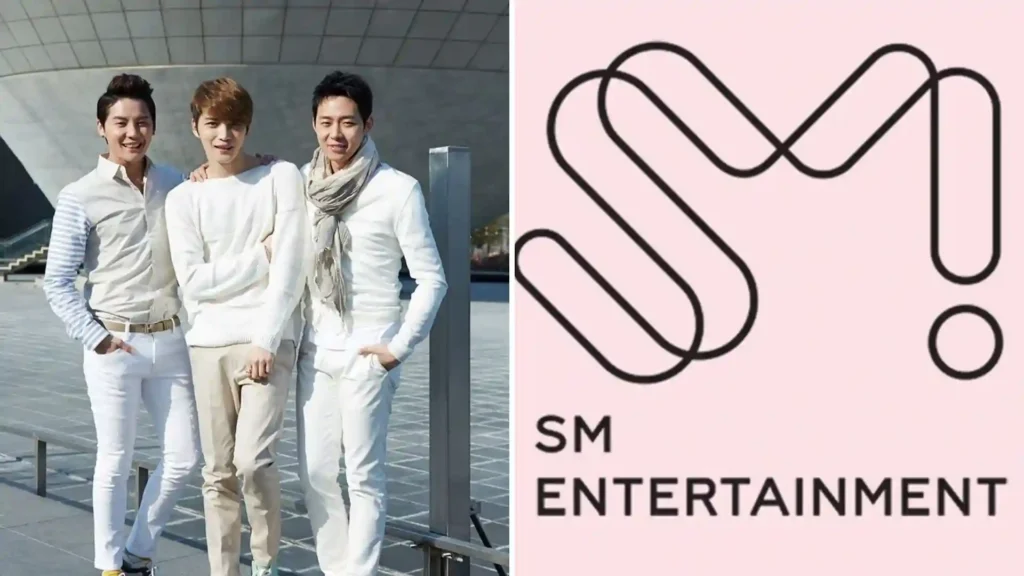
Table of Contents
K-pop Industry As a Corporate Setup
Unlike other music industries, which are primarily based on the creative appeal of the artist and the managerial work of the associated staff. K-pop is more of a hierarchical corporate order with individuals placed at each level of hierarchy employed with different yet important tasks to pull off. The corporate setup in K-pop includes creative heads, business heads, accountants, and other related roles, as in a well-established company. Why not? Music labels in the K-pop industry are nothing but capitalistic organisations finding profit-making opportunities and benefiting the owner, executives, and the South Korean economy as a whole.
When we talk about the K-pop corporate setup, we must channel our attention towards the Big 4 in the K-pop industry. Yes, it is somewhat similar to the Big 4 in the consulting sector. So the Big 4 music labels include popular names like SM Entertainment, JYP Entertainment, HYBE Corporation, and YG Entertainment. However, the Big 4 label is misleading, as HYBE Corporation has a market capitalisation higher than the combined market capitalisation of the other three companies in the line. But for the sake of explanation and simplicity, we will refer to them as the Big 4 in this analysis.
The corporate setup in the K-pop industry is the same as in other industries. There are subsidiaries, parent companies, rules and regulations, shares, equity stakes, investments, and all other corporate jargon you might know. And when we refer to the K-pop industry as a well-established corporate sector, we must also realise that no sector is free of conflicts and disputes. Therefore, there are several corporate conflicts, for instance, the ADOR vs Min Hee-Jin dispute surrounding the K-pop industry, which we will discuss in the subsequent sections of the piece.
For You: How Music Companies Monetise K-pop Idols: The business of K-pop
The Role of Primary Entities
By referring to primary entities under a corporation, we mean the investor, shareholders, board members, and executives. Each of the entities is powerful yet interdependent for performing certain important tasks within the organisation. The role of an investor is to primarily invest in the agency to expand, train idols, and acquire small labels, absorbing competition from the market. The investments are long-term and expect the profitability from the K-pop groups and their governing agencies.
However, major shareholders or board members hold the company accountable in appointments, mergers and acquisitions, and influence the decision-making process at the executive level. While minor shareholders hold agencies accountable by demanding the financial and audit reports, trading their shares, and debating management decisions. Shareholders are a crucial part of the corporate conflicts in the K-pop industry.
Then comes the executive or management of the company. This includes CEOs, creative directors, CFOs, producers, etc. This comprises the main decision-making arm of the corporation for its day-to-day operations and for knitting the budgetary requirements for the fiscal year. All these entities together make up the corporate setup in the K-pop industry.
Why Concentration of Power Leads to Corporate Conflicts
Concentration of power in one or a group of people has historically resulted in abuse of power and eventually conflict and dispute at large. The same is true for the K-pop industry, where we find overlapping roles and porous boundaries that result in corporate conflicts and legal disputes. For example, the founders’ role as producers has transcended the role of creative directors and, in turn, snatched the creative autonomy from them. This is a classic example of conflict between two powerful roles under the corporate setup, among others.
Though companies have a well-defined hierarchical structure, divided into power and responsibilities. Yet, top-down decision-making has plagued the companies in South Korea, and has remained a bone of contention between executives within the organisation or between subsidiaries and the parent organisation on a larger canvas. It is rightly said that power corrupts and absolute power corrupts absolutely, and this is quite evident in the case of the K-pop industry as well. This being said, we must also look at some of the types of corporate conflicts in the K-pop industry before discussing prominent cases of the time.
For You: Stray Kids vs Riize: Which K-Pop Boy Group is More Famous
Types of Corporate Conflicts in the K-pop Industry
There are primarily four types of corporate conflicts in the K-pop industry. Those who are interested can check the types of conflicts in the following points mentioned below.
Agencies vs K-pop Artists
Many times, agencies compel K-pop idols to sign an authoritative, restrictive, and limited contract with draconian provisions. These corporate contracts are widely known as “slave contracts” in and outside South Korea. The primary conflicting provisions are of length, nature, and revenue distribution clause in the contracts. We can better understand it through an example of corporate conflict between JYJ and SM Entertainment.
TVXQ was formed and debuted in 2003 and hit the peak of its career in 2009, when the full-member group performed at Tokyo Dome in May 2009. However, three of its members, including Junsu, Yoonchan, and Jaejoong, filed an injunction asking for the termination of their contract with SM Entertainment. They termed them as a slave contract, highlighting the unreasonable termination clause and the excessive length of the contract of about 13 years, excluding non-promotion time.
Non-promotion time means the time when K-pop idols are not promoting the brand and group, like when on compulsory military service, or even sick. Such time is excluded from the 13-year duration of the contract, as per sources.
Moreover, SM Entertainment was accused of not following the prescribed revenue-sharing norms mentioned in the contract and treating artists inhumanely for the sake of profit-making. The court sided multiple times with JYJ before finally granting the termination of the contract in 2012 against SM Entertainment. However, JYJ won the case but struggled in the K-pop industry to find work and public appearances because of SM Entertainment’s stronghold and influence in the K-pop industry. TVXQ continued as a two-member group, and JYJ struggled in the industry for work and recognition for years.
Parent Company vs Subsidiary
The larger parent company establishes subsidiaries to delegate its operations, make investments, and launch new ventures. However, this relationship may be plagued with issues like copying, intellectual property, ownership rights, and potential creative control. Although subsidiaries are granted a degree of autonomy in their work, potential encroachment by the parent company may create a case of corporate conflict in the making for both organisations in the K-pop industry.
HYBE vs ADOR corporate conflict remains one of the most popular disputes, having several twists and turns before reaching the court. HYBE corporation launched an emergency audit of the subsidiary, whereas in return, the then CEO, Min Hee Jin, addressed a press conference and alleged that HYBE is copying NewJeans and infringing on the creative autonomy of the subsidiary.
Min Hee Jin filed an injunction in the court to stop her removal process, which was temporarily halted by the court. Moreover, NewJeans also jumped into the conflict with their contract disputes with the parent company HYBE Corporation. Moreover, Min Hee Jin accused HYBE of plagiarism, termination of shareholders’ agreement, and trespassing on the creative autonomy of the subsidiary. Following the corporate conflict, Min Hee Jin won the case against HYBE, and ADOR NewJeans members were directed to honour the contract. They eventually returned to ADOR, though only three, and ADOR functioned under a new CEO and remained part of HYBE Corporation.
Leadership Power Struggles
This is about the boardroom drama between the founder and shareholders over several issues, from the usage of funds, new investments, to the appointment of executives in important positions, to mergers and acquisitions. The drama often turns into a leadership struggle when the meeting intensifies, and the core question becomes who controls what. Here is a classic example of a leadership struggle between Lee Soo-man and SM Entertainment’s internal management.
Lee Soo-man is the founder of SM Entertainment with the highest stake of 18.5% in the company. The co-CEOs include Lee Sung-soo and Tak Young-jun in the internal management of the firm. The internal conflicts started with the displacement of money from SM Entertainment to “Like Planning”, a company owned by Lee Soo-man, for production consulting. In retaliation, internal management created an SM 3.0 strategy to streamline content releases, global presence, and more, without the consultation of Lee Soo-man.
In a big jolt, internal management sold shares to Kakao to reduce Lee Soo-man’s influence in SM Entertainment. Kakao allegedly acquired 9.05% stake in SM Entertainment and became the second largest shareholder in the company after Lee Soo-man. In response, Lee approached HYBE to sell his majority shares, but HYBE stepped back after Kakao proposed a tender offer and acquired the largest stake in the company. As a result, Lee Soo-man exited the company, and SM followed the SM 3.0 strategy and production.
For You: When will ATEEZ come back with their new album?
Reasons for Corporate Conflicts in K-pop
There are several reasons for the propping up of corporate conflicts in the K-pop industry. Much credit goes to the hierarchical structure of the organisations and the leadership struggle within the internal management of the firm. Here are some of the obvious yet important root causes for the corporate conflicts in K-pop.
Power Struggle: The power struggle for leadership in the company is one of the most important reasons for the arising corporate conflicts in the industry. The disputes between the founder and aspiring executives, co-founders, or internal management led to long, drawn-out conflicts, which often result in legal disputes and aggravation.
Hierarchical Structure: The corporate firms are managed in a hierarchical structure. Each individual has a position and responsibilities to perform. However, the boundaries are porous, and management is top-down, making the executives placed at a lower hierarchy vulnerable to the actions of management and hijacking of decision-making at large, compromising creative autonomy.
Intellectual Property Rights Disputes: The allegations of plagiarism and copying are a direct attack on the year-old hard work of a creative director or artists. The best example being the ILLIT and NewJeans plagiarism controversy raised by the former ADOR CEO, Min Hee-jin. The ownership rights are sacred to the agency and the particular K-pop group and protect their brand and identity in the K-pop industry.
Slave Contracts: The contract signed between the agency and K-pop artists is often termed a slave contract due to its inhumane provisions, long duration, and unreasonable clauses related to revenue sharing and equity. Many K-pop idols rebelled against their companies because of the provisions of their contracts and minimal profit distribution for the idol or the group.
For You: Top 50 K-pop Groups of All Time: Icons Who Built A Global Industry
Future of the K-pop Industry Amid Conflicts
After witnessing so many major corporate conflicts in the K-pop industry, the way forward is indeed to reform the corporate governance setup to incorporate more transparency and inclusivity from lower hierarchical levels. Implementing such reforms will lead to a reduction in corporate conflicts in the industry and promote the overall growth of the companies and the economy as a whole. Additionally, drafting liberal rules and regulations for the executives and shareholders will have a positive effect on the operations of the firms and will result in better management outcomes.
Frequently Asked Questions
What are the negative effects of K-pop on students?
Constant consumption of K-pop by the students has been reported to have negative effects on them, such as not focusing on their academic curriculum, a lack of cognitive development, a short attention span, and idol worship. This eventually hurt their overall development.
Is K-pop good for your brain?
According to a study, K-pop is responsible for emotional health benefits for several individuals when consumed with balanced awareness. It raises happiness for the individuals and self-esteem, along with reducing stress and anxiety by releasing dopamine.
Who are the big four in K-pop?
The big 4 companies include popular names like HYBE Corporation, SM Entertainment, YG Entertainment, and JYP Entertainment in the K-pop industry. The HYBE Corporation have more than half of the market share in the K-pop market.
Who is the IT girl of 4th gen?
IVE’s Jang Wonyoung is known as the IT girl of K-pop industry due to her immense popularity among the fans and netizens across the world. She also popular for her brand endorsements and fashion influencing people.
Why is Katseye not a K-pop group?
Katseye is generally considered a global group rather than a South Korean group as its headquaters is based in California, management is from USA with a joint venture, and the group members usually sing in english. Therefore, Katseyes is labelled as a non K-pop group.