BTS became a global phenomenon after it entered the K-pop industry and changed the whole global music industry with its cultural influence, which no one could have ever imagined. K-pop was already in talks due to the famous Korean artists like PSY, BIGBANG, Girls’ Generation, TVXQ, etc., but BTS took the Korean entertainment industry from a niche global fandom to a mainstream force that maybe no one can resist in the post-BTS era. The group reshaped every single dynamic, like streaming, fandom culture, social media marketing, tours, fandom interactions, international diplomacy, and whatnot.
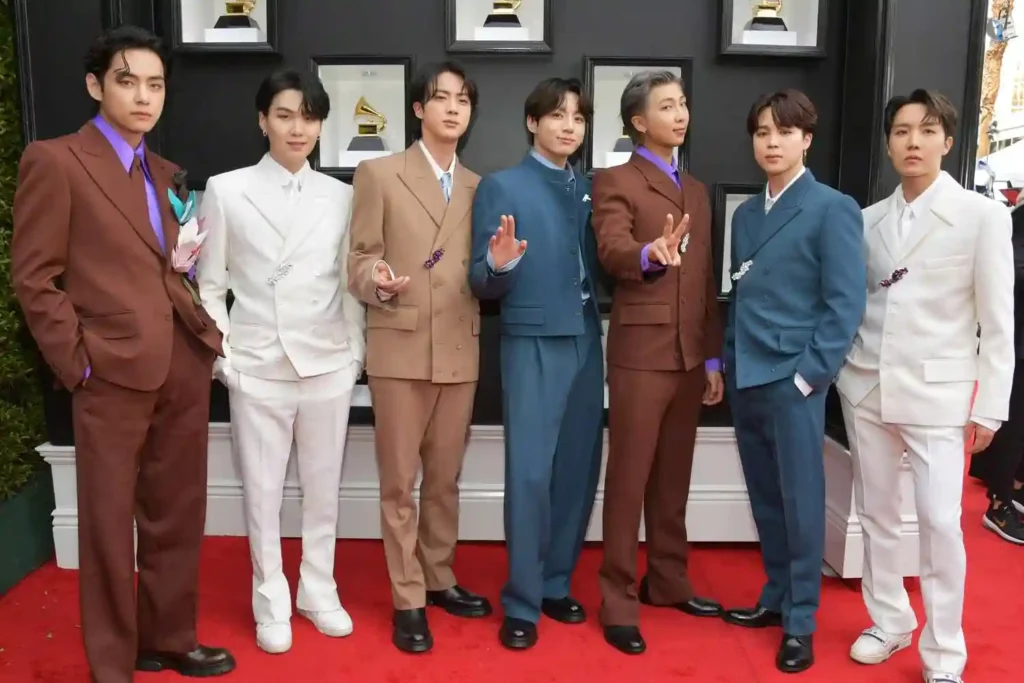
The group disappeared not because it ended its journey but because the members went to their military enlistment services, which are necessary for all male citizens between 18 and 28 years old to perform mandatory service, while some went to solo activities. While the members were on a hiatus, a question arose whether any other group could replace BTS and achieve the same scale of global dominance as they did.
Table of Contents
Why BTS Became More Than Just a K-pop Group
Before we discuss other rising groups and compare them with BTS, it is important to have a look at BTS, what makes it an exception, why it became a global influence, etc. The group faced major challenges, so they could establish a strong place for themselves and make their group a success story. The group debuted in 2013 under BigHit Entertainment, with its first single, “2 Cool 4 School”; unfortunately, the album did not do great. Unlike other first releases of groups at that time, BTS’s first album song release was the one that faced major skepticism from the public and industry.
Just like their first debut album, most of BTS’s early songs were met with backlash as the group’s lineup, including RM, Jin, SUGA, j-hope, Jimin, V, and Jungkook, clearly criticized putting academic pressure and social inequality on the young audience, and their songs did not fit in with the cultural and traditional standards of the South Korean industry.
The members did not stop and continued to create the concepts that they thought would achieve success with, but unfortunately, the Korean audience rarely engaged itself to these tracks. As the BTS’s themes brought forward struggles faced by young people, academic and societal pressure, and emotional frustration, the underdog narrative developed as an official identity of the group, and younger Korean and global fans started to connect deeply with the ideas published by these members.
From that day, the group members did not even look back, as they only saw rises in their journey. The South Korean group that began with seven young idols did not know, during the time of their debut, that they would travel this far in their journey or that it would become a global phenomenon.
The group won the Top Social Artist award in the US Billboard Music Awards (BBMA) and became the first Korean artists to be invited to the American Music Awards (AMA) in 2017. Next year, the group again won the Top Social Artist award in the US Billboard Music Awards (BBMA) while performing live for the American audience for the first time. They made history as they became the first Korean artists to make their place in TIME Magazine.
Many believe that the group mainly focused on fan dedication and social media strategy, which brought them this far, but the real reason lies in their ability to combine and stay consistent with artistry, timings, culture, emotional availability, and fans’ perceptions. The group not only appeared to be transparent but actually was.
For You: The BTS Phenomenon: Strategy, Storytelling, and Global Domination
The members neither found it shameful nor did they restrict themselves to discussing serious topics like insecurity, burnout, depression, artistic pressure, etc., in their interviews and livestreams. This made them relatable and emotionally available to their fans, who could feel understood and seen. They often kept them motivated and took several values from them, and eventually found them in a much better place than before.
The members promoted the “Love Yourself” concept while encouraging values like self-esteem, self-respect, and other related concepts of self-love. This resulted in loyal fan engagement, where the fans were not just consuming the content but also communicating, participating in it, and exchanging their ideas.
The fans felt that BTS’s and its ARMY’s connection was more than just a celebrity-fan relationship; it was more genuine, more refined, and emotionally cultivated. It was not only about supporting, defending, and admiring but also about strengthening BTS so they could stay consistent, reciprocate, or leave with finding a genuine place in everybody’s heart.
What made it develop such a strong and supportive fanbase was the members’ genuine concern for their fans in speeches, performances, online livestreams, and various interviews. As they developed huge global fame, the ARMY continued to become more organized online and serve as fan service when and where required.
Gradually, the group changed the narratives related to Western markets as well after it launched “Dynamite,” which sold-out stadium tours; marked Billboard success; and had mainstream media and show appearances, as it was a global hit. Since the songs were a mix of Korean and English, it was easy for the audience to stay engaged, and the BTS craze reached its peak when the fans started learning the Korean language.
Through BTS, the audience’s behavior, the Korean entertainment industry’s approach, and various global perspectives about Western and Asian music changed drastically. The group came out to be perfect in all aspects, whether it be responsibilities, the Korean audience’s engagement, establishing the craze of K-pop worldwide, maintaining consistency on digital platforms, or being responsible citizens.
All this clearly reflects how difficult it was to take BTS’s position after the group went on a temporary hiatus. All the entertainment companies adopted the same analytical tactics that could develop a new global act.
For You: Top 10 BTS Concert Moments of All Time
The Changing Structure of the K-pop Industry After BTS
The Korean entertainment industry shifted dramatically after BTS formed its own different wave. Every single dynamic surrounding the K-pop industry’s structure was changed, modified, and evolved. The agencies started treating the idols differently; the management teams that prevented the idols’ activities and controlled them on their own became limited to a minor group of idols.
HYBE was not financially stable at the time of the debut of BTS; it wanted groups that could lift its status and support it financially. So, the BTS members were allowed to do almost whatever they wanted; they produced what they wanted, directed, interacted, and appeared as they wanted. The transparency impressed the audience as the members themselves became a direct medium to the audience. The agency did not restrict them from doing, sharing, or encouraging whatever they wanted, which is unusual in the K-pop industry.
While these changes, made with efficient usage of algorithms and trends, helped the BTS members to grow and hold a strong place in the market, on the other hand, as the agencies forced other groups to do so, idols started to feel like they were manufactured despite growing and evolving naturally. For BTS and other groups, like BLACKPINK, X: IN, etc., this strategy benefited them, while for others, the idols found an environment where visibility reduced their artistic individuality.
Fans do not regard the group as an idol group; rather, they refer to BTS as a brotherhood. This strong relationship was another reason for its success; there was no professional relationship. The emotional closeness between the members and fans was clearly visible during their interviews, behind the scenes, performances, and livestreams. Also, the members continued to do experiments with vocals and music compositions, which proved to the audience how dedicated they are to them.
Eventually, many groups came that experimented with different music genres and did their best. Just like BTS, the industry also opted for a different method that involves the economics of the fandom culture. This increased the trends of albums, merchandise, livestream events, concerts, consistent social media posts, and even these approaches used to attract way more revenue as compared to traditional sources. And today, almost all the Korean entertainment companies find this collectible culture interesting.
For You: Top 10 BTS Moments Fans Still Talk About
Mixing the Korean and English languages was one of those ideas; it helped BTS strategically. This approach allowed them to increase global presence while promoting Korean culture and ethics in the Western markets. Rest groups in the industry started to opt for the English language as well as include multinational members in their groups, so that they can naturally engage the global audience towards themselves.
No doubt, before this approach, K-pop still revolutionized in the western markets, but the audience was not loyal; the reactions, comments, and views were limited to exceptional hits only. The industry became more data-driven as streaming metrics, engagement statistics, chart performances, social media platforms, and digital algorithms all affected and started shaping promotional decisions in real-time.
The trend of replicating successful and proven formulas may cause the innovation to suffer, as the reports have suggested, as this method reduces creativity and limits success despite introducing more such stories like BTS. Due to prominent groups like BTS and BLACKPINK, the pressure is raised on several rookie groups to become influential and keep themselves in touch with the audience, so that they can make an irreplaceable place in the Korean industry.
These groups are expected to achieve instant success as everything needed is already available to them, which seems quite unrealistic at the moment, as the K-pop industry is becoming more competitive day by day. No entertainment company, idol, or artist understands how BTS spent years in struggle to find their own identity and build a loyal fanbase to achieve the heights they have reached today.
Currently, no one has the same patience and enthusiasm to do hard work, struggle, and achieve what they want; instead, they desire to have something in a second. As the post-BTS era is full of sources larger, wealthier, and globally connected than ever, an important question arises: could any genuinely similar phenomena occur for their vitality and commercial efficiency in the industry?
Can Any Current K-pop Group Reach BTS-Level Influence?
The debates, conversations, and discussions related to “the next BTS” keep surfacing on social media platforms and among digital fan communities. No doubt, this is totally unfair to discuss because no success can be assumed or measured by direct comparison. Several brilliant groups like Stray Kids, SEVENTEEN, TXT, ATEEZ, ENHYPEN, and NewJeans have made their own craze among the Korean audience through their own models of global popularity.
While some groups marked their importance as they excelled in touring power, others achieved virality through streaming, fashion influence, and concept variability. These groups have engaged a loyal fandom along with their releases, but unfortunately, no one has been involved in BTS-level success that includes commercialization, emotional attachment, cultural symbolism, and multiple demographics all at one.
Stray Kids became recognizable due to a strong international identity that developed through its self-produced music and high-energy live performances. The members opted for frequent tours so that they could form a deep one-to-one connection with their fandom and provide themselves with emotional support. Even the touring numbers and album sales surrounding the group are insane.
Their fans appreciate how the members themselves get involved in songwriting and production and provide them with authenticity. SEVENTEEN too became successful with its strategy of synchronization, teamwork, and constant music identity. They are regarded as performance innovators and self-producing idols just like BTS and Stray Kids.
For You: BTS Arirang Sets New Record, Selling 4 Million Copies in Just 3 Days
Girl idol group NewJeans is also counted among the top-tier K-pop groups. The group has influenced the aesthetics through members’ minimalist branding, nostalgic sounds, and natural visual presentation. Their impact revolves more around fashion and digital culture. Even BLACKPINK comes on the second most famous K-pop group list; however, the members are mainly regarded as the strongest global luxury-fashion influence.
The members have a different approach as they focus more on individual branding. They have three main identities: music artists, fashion ambassadors, and global celebrities. Do any of the above-discussed groups replace BTS and its emotional universality?
No, this is because of fragmentation. BTS had a relative singularity during the time of their rise, but today the attention is widely distributed among various competitive groups. No doubt the groups are achieving success, but they have divided the audience ecosystem. While some members master in their self-producing music, others master in fashion and global branding, which makes the audience crave to follow other groups as well.
Also, while BTS introduced its loyal fans to the K-pop entertainment industry, newly developing groups are already exposed to it. But obviously, it would be incorrect to predict that no future idol group can become as influential as BTS. Maybe the next global phenomenon does not resemble BTS at all. Apart from BTS’s success, it may arise from different musical styles, multilayered identity, hybrid digital experiences, and other new forms of fan interaction.
The Role of Authenticity and Emotional Connection in Modern Fandom
Major entertainment companies often misunderstand the approach of BTS’s members towards their role of authenticity and the emotional connection that they have built. So, they force their idols to reproduce the same promotional strategies that focus on deeper emotional dynamics. The agencies think they need to make the fans feel personally connected to them. But as the K-pop industry evolved, so did its audience.
Modern audiences are no longer based on music consumption as a whole; they want emotional experiences, community belonging, personal identification through other artists, etc. BTS provided sincere emotional messages as the members freely discussed failure, burnout, fear, and ambition. Their authenticity created trust, and trust created loyal fandom.
Today, the entertainment companies provide an environment that is extremely sensitive to be referred to as authentic; it looks more formal, forced, and artificially built. Highly polished visuals and music videos emerge with visibility, but relatability requires emotional attachment.
Sometimes, the pressure on idols to look authentic becomes emotionally exhausting, as being under the public eye is not an easy task. Also, what they lack in comparison to BTS is storytelling. BTS members had long-term emotional narratives where fans evolved through themes of youth, self-discovery, self-love, fear, and identity. Such narratives keep the fans engaged, but this is also what lacks in newer groups.
For You: BTS Arirang faces backlash following work with Diplo
Conclusion: Will There Ever Be “Another BTS”?
From the above discussions, it is sure that the upcoming global phenomena are not going to emerge from the United States or Western markets but originate from countries like Korea, Japan, Latin America, Africa, and other Asian countries. Nowadays, the entertainment companies are not limited to their domestic geographical areas; they are accelerating their own cultural influences through digital availability. However, the post-BTS era is redefining the real meaning of global stardom and how it is going to use evolving technologies for its benefits.
Rest, the answer to the question of whether the industry can produce any other like BTS still doesnot has any simple answer of yes or no, because the group was not a normal commercial success story; they had something distinctive in them, which made them “perfect” in every single way just as the agencies and audiences want. The rise of BTS is a rare combination of timing, technology, emotional authenticity, fandom culture, and generational influence. No one, as of now, has manufactured any such cultural resonance as the BTS members did.
It may happen that the next global phenomenon does not resemble BTS’s success and has its own complete set of rules and goals for its success, as the artistic approaches, technology, and cultural contexts are increasingly evolving. No one would ever forget BTS’s legacy, as the members did not simply make K-pop a global market but proved to fit into sincerity, cultural identity, and human vulnerability across borders, languages, and generations. Let’s see how the international music industry will continue to chase similar answers in the years ahead.
Frequently Asked Questions
How did K-pop demon hunters become a global phenomenon?
When K-Pop Demon Hunters landed on Netflix in late June, no one predicted it would become a globe-sweeping, chart-topping phenomenon. The near-instant success of the animated kids’ film caught the industry by surprise, and six months later, fans are still hungry for merchandise, music, spin-offs, and more stories.
Is BTS bigger than Coldplay?
The most viewed group on Global YouTube weekly is BTS at number 1 with 101M (383 weeks), Blackpink at number 2 with 100M (305 weeks), and Coldplay at number 3 with 62M (383 weeks).
How did K-pop become a global phenomenon?
By the early 2000s, TVXQ and BoA had achieved success in Japan and gained traction for the genre overseas. In the 2010s, the Korean Wave and social media drove the international popularity of K-pop. In 2019, South Korea ranked sixth among music markets, led by artists BTS and Blackpink.
Is Big Bang or BTS more popular?
BTS is significantly more popular on a global scale, as it holds records for the highest-selling albums and largest worldwide stadium tours. BIGBANG, however, is widely considered the legendary pioneering group that laid the foundation for modern K-pop and holds massive, enduring popularity in South Korea and the rest of Asia.
Why did Sony sell K-pop Demon Hunters?
This wasn’t Sony shopping around a finished film; Netflix essentially funded the production while Sony handled the creative work. At the time, the deal made sense. Theaters were still recovering from pandemic closures, animated films were struggling at the box office, and Sony lacked its own major streaming platform.