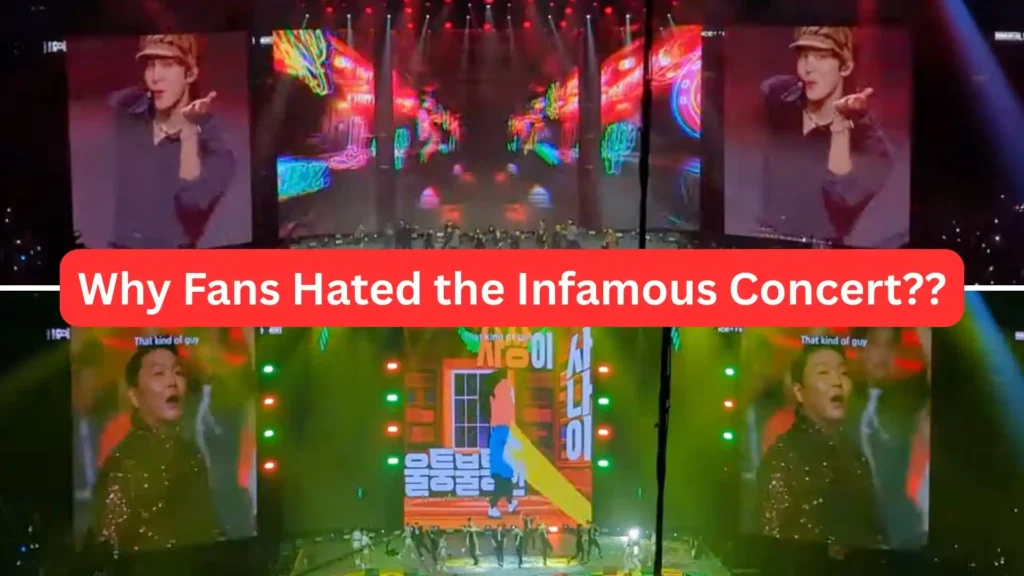
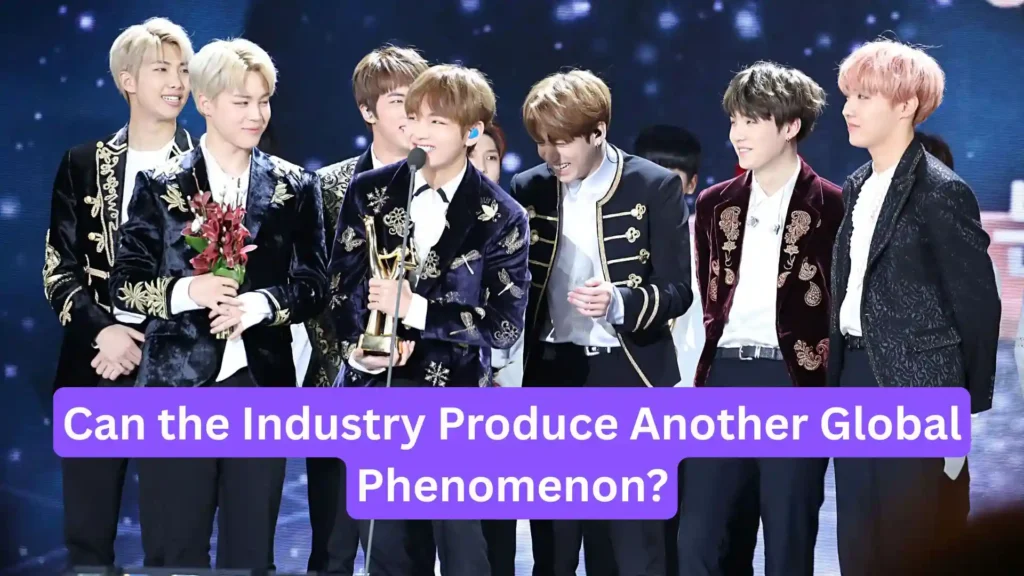
Music shapes the cultural identity of distinct areas, landscapes, states, and countries. It is more like a tool that reflects personal experiences and a clearer sense of what has happened and what set of rules are followed in particular societies. South Korea has used its music to strengthen its community and create several moments that unite people all around the globe across different cultures, ages, and backgrounds. Over the years, the Korean industry has transformed its place to get recognized on the charts.
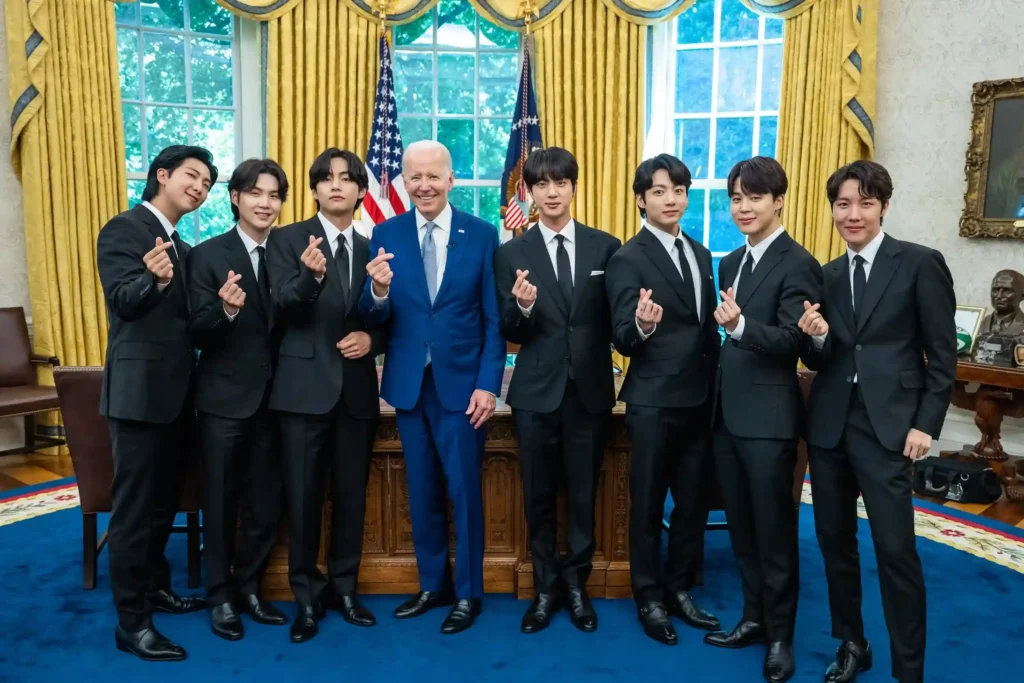
Before, it was known for its technology, tech tools, and economic development, but today, the entertainment industry is exactly what defines South Korea more. Through its music and hit releases, it first entered the global markets and, with its help, established a cultural influence. The K-pop music was not something that one could listen to, but it had full-fledged diplomacy, branding, promotion, and cultural influence behind it. Today, Korea has a strong ability to shape the international audience’s narratives and perspectives through music and entertainment attractions rather than any forced action. This article contains detailed information on how K-pop became one of the most efficient and effective soft power tools of South Korea to develop relationships between entertainment and diplomacy.
Table of Contents
Understanding Soft Power and the Rise of the Korean Wave
“Soft power” is a concept that refers to the ability of a country to shape and impact global narratives in order to create an international influence through attraction and the audience’s own will to listen rather than forcing any opinion on others. The term was invented years ago, but was popularized by a political scientist named Joseph Nye. He explained how different nations can impact various cultural values, economic conditions, and media through their rise.
Today, as South Korea’s entertainment and music industry is at its peak, it can be considered the strongest example to refine and understand this concept. Unlike hard power, which requires military, forceful methods, and economic pressure, soft power works with attraction, admiration, and inspiration. Korea understands this in detail, but its rise as a soft power did not happen all of a sudden.
With the Korean War during the 21st century, the country faced a sudden and rapid change in its industrialization and economic growth. The country gained economic success but noticed it still lacks a strong representative identity around the globe, whereas its neighboring countries, like Japan and China, dominate the cultural exports. However, in the 1990s, after the success and hype of Hollywood films and J-pop entertainment companies rose, the South Korean management team noticed how these cultural industries play an important role in the economic world as well as global recognition.
The insider reports mentioned how much the blockbuster films generated, pushing the Korean industry to get inspired and invest its own funds in the entertainment industry. Eventually, the Korean Wave, “Hallyu,” spread with the rise of Korean drama serials in East Asia and gained popularity in countries like China, Japan, and Taiwan.
The result was not as drastic as the country wanted, so they decided to change their approach, and soon, K-pop music came. The entertainment industry noticed a craze for music across all age groups worldwide. So, they decided to create and spread their influence through song covers and album releases. The top-tier agencies began to train highly structured idols through training systems and made them perfect in skills like dancing, singing, vocal abilities, languages, and branding. These idols were combined into various bands, which produced music and performed live, featuring their intensive, energetic choreographies.
As a result, by the 2010s, the South Korean industry had evolved and was at the center of the global industry, engaging itself more in fashion, storytelling techniques, and visual aesthetics. Slowly, the Korean entertainment industry became a multimedia industry instead of an audio entertainment industry, as the director and producers thought. Through its expansion, South Korea’s image and reputation changed as well.
The audience started to talk about aspects related to innovation, creativity, beauty, and youthfulness, and found the Korean industry almost at the top of every field. This engaged them to study and follow the Korean ethics to look at what they are doing differently. Not only this, but this attracted more people towards them, helping them to develop economically and generate political influence and tourism.
For You: How Visual Aesthetics Shape the K-pop Industry and K-pop Idols
Government Support and Cultural Policy Behind K-pop’s Expansion
Behind the cultural policy and expansion of the K-pop industry, the South Korean government plays an important role. Other countries’ governmental authorities do not have any direct or indirect influence in such matters, but the Korean industry marks itself as an exception in this as well. The Korean entertainment industries have always had the government at their back; the reason being that they recognized how cultural exports can serve as a strategy to increase the national asset.
Also, after the 1990s Asian Financial Crisis, the government encouraged every single industry that could make it possible to boost the country’s economic recovery. Some policymakers found the music sector to serve as high-potentiial sectors. So, the government involved itself and invested in the infrastructure, education, and technology of the industries so they can support the industry in return.
As the idols came to be known for their music and started influencing the outer world, they encouraged the ministry of culture, sports, and tourism among their fandom in order to promote Korean culture. Through its financial support systems, export assistance for cosmetic products, and training programs, the Korean companies start expanding beyond the local Korean market.
Even Korean embassies worldwide made their contribution to promote the Korean wave, as these cultural centers indulge themselves in dance competitions, Korean language classes, film festivals, and worldwide fan interaction events. These campaigns and back-to-back programs engaged foreign audiences with the Korean culture. One main reason for the development of the cultural influence of Korea through music is that the government authorities allowed the private entertainment companies to freely flourish and operate.
For You: Role of Social Media Algorithms and Trends in the Popularity of K-pop and Idols
This can be rarely observed in any of the countries, as the government always wishes to control everything it can. The K-pop groups and agencies were given all the favourable conditions. Gradually, HYBE became the most powerful agency with its maximized cultural influence and global recognition of its music bands. Other agencies like SM Entertainment, YG Entertainment, and JYP Entertainment developed over time and started encouraging more idols to confront the Western markets through their skills and talents.
Apart from this, the Korean government decided to turn locations and places featured in music videos and entertainment sources as the tourists places to encourage tourism potential. This brought the audience from different regions together in cultural places for concerts and fan meet-and-greet events. As a result, the cultural popularity became a key reason for economic growth.
In addition to this, many idols served to promote their culture by participating in various international events to represent Korea and as honorary tourism ambassadors. The government played a crucial role in combining public innovations, tourism, and music, and creating South Korea as one of the most influential entertainment industries.
Social Media And Digital Platforms
The influence that K-pop made worldwide and even South Korea’s globalization would not have been possible if social media and digital platforms had not held as much importance as they hold today. The digital technology and rise of streaming platforms hastened the growth of the idols by giving the world their vast exposure.
Before, the entertainment industry’s presence only thrived on sources like TV, radio, and local newspapers, but with the rise of YouTube, Twitter, TikTok, and Instagram, everything bloomed. Not only was the music, which actually attracted the audience towards Korean culture, intensified, but other social and cultural influences also escalated among the audience.
Just like the companies noticed the impact of music in the global entertainment industry and how it could help to gain a reputation in society’s world, similarly, they analyzed the importance of social media for increasing an idol’s potential. The Korean agencies did not find it appropriate to rely on Western media and its outlets in order to grow their reach; soon, they thought of making use of social media and making a strong online presence.
What made this plan successful were digital algorithms. They directly ruled the digital market through attractive visuals, unique storytelling, and high-quality music videos. The main presence was marked on YouTube, where such high-quality and budget videos quickly engage the audience. Soon, the reaction videos, reviews, dance covers, and fan edits began surfacing in the online communities, which gradually made it possible for the industry to spread more information about the Korean culture and make people embrace it.
For You: How Music Companies Monetise K-pop Idols: The business of K-pop
The viral music video “Gangnam Style” became the most viewed video on YouTube’s history, introducing K-pop music to hundreds of thousands of people worldwide who did not even know K-pop music could be so amazing and interesting to listen to. As the idols and groups started to gain fame and respect for their K-pop music and groups’ concept, many audience members started following them as part of their daily lives, recognizing the secrets to their visuals and supporting the core values and responsibilities that they shared through random acts and comments online.
Through various streaming projects, voting systems, translation accounts, and charity campaigns all around the world, social media intensified the Korean trend everywhere possible. Later, a new trend emerged in the form of creating short-form videos; K-pop used it too in trending dance hooks and making challenges out of them. This was a strategy so they could form a loyal fanbase.
Their consistency and continuous efforts occupied the whole digital workspace, developing a strong bond with fans. After the development of several tools like translation, subtitles, and auto-captions, it made it easier for K-pop’s fans to quickly access and participate in the Korean communities. Through streaming culture, music got rapid hype, as now the music can be consumed wherever someone wants to. K-pop idols found it easy to monetize and promote their music due to their strong presence, boost chart performances, increase video views, and support album sales, both physically and digitally.
BTS And The Transformation of Korea’s Global Image
No Korean discussion, especially when it is related to soft power, can ignore the impact of BTS. The South Korean group that began with seven young idols did not know, during the time of their debut, that they would travel this far in their journey. Through its remarkable journey, the group changed the narrative of the world on how they actually view Korean music and South Korea itself.
Unlike other popular groups and idols, BTS faced major skepticism from the public and industry just after their debut. Their songs clearly criticized putting academic pressure and social inequality on the young audience. This concept did not fit well with the cultural and traditional themes of South Korea. But the songs deeply resonated with the global audience. Song themes consisting of concepts like youthfulness, loneliness, ambition, self-love, fear, and personal growth were rare, and that was all about BTS’s discography. The team did not treat music as an isolated project; they structured their discography like an evolving story.
For You: Top 20 K-Pop Scandals Of All Time: Controversies That Shook The Industry
Thinking and building such storytelling skills are not limited to expressing one’s pain. It’s about being relatable and making it normal for people to feel the way they are feeling and then to heal while making it look effortless. As the audience consumed and translated BTS’s content, releases, webtoons, and series, more and more people started to get engaged with their concept that openly talks about self-acceptance. As the BTS ARMY developed itself into the most influential fandom community of the time, BTS started achieving several awards and made South Korea a proud country that no idol group could do before them.
Even during their hiatus, the group held a strong position in the hearts of their fandom. In the industry where new idols emerge daily, BTS thrived even without its physical and digital presence. BTS contributed a lot to developing Korea’s image through its fame, cultural values, motivational messages, and emotional bond that it created with the fandom. The success of BTS increased South Korea’s cultural status, and more people paid attention to the Korean entertainment industry for language, fashion, skincare, tourism, and music videos.
Korean Language, Beauty Standards, and Lifestyle Influence
What became the strongest aspect for the Korean industry to develop itself into soft power, and its success includes how Korean communities, idols, and music videos influenced their lifestyle trends, beauty, and the Korean language. Now, the audience has started to adopt Korean culture in their everyday lives. Even in recent years, the Korean language has occupied its place as one of the significant languages of the world, and also made it possible for South Korea to expand its international growth.
Even worldwide universities have started considering and promoting Korean study programs through language learning apps, Korean courses, and Korean lessons. No other language than English has ever achieved this importance, and it is crazy. Fans have started to learn Korean so they can attend the livestreams and understand the idols, agencies, and news related to them more deeply. Even though they did it so they could be a part of Korean communities and set their careers while getting inspired by the idols in South Korea itself.
The expansion of Hallyu, the Korean Wave, has now expanded into other areas outside of the entertainment industry, like food and fashion trends. Korean food, including kimchi, tteokbokki, ramen, and Korean BBQ, is now seen and enjoyed by the whole globe due to Hallyu programming that promotes these items through its usage. Fashion inspired by K-pop idols has helped to shape regional hair and even the makeup styles, streetwear, clothing styles, and luxury brands that are developed in collaboration with K-pop artists; all of them have had tremendous effects on global youth culture, too.
Hallyu programming has also aided in the development of the Korean beauty industry, as consumers around the world become interested in K-pop based on how “perfect” idols are and because of their increased interest in various Korean beauty routines and products. As a result of these developments, the way that K-pop has changed how consumers view the Asian entertainment industry and Asians is at a different level than it was previously. Korean artists are now largely represented in mainstream markets that were previously controlled by Western media.
For You: Why Girl Groups Are Dominating K-pop’s New Era (2023-2026)
The Japanese and K-Pop beauty standards have been criticized numerous times for their unrealistic expectations concerning body shape, skin texture, and physical perfection, given that the K-Pop industry creates an extremely visual-oriented culture. Many critics have been debating the significance and force of plastic surgery in the K-pop industry for a long time, as they argue that the visual culture of K-Pop supports and reinforces poor beauty standards for children.
While many idol groups have continued to produce more unique concepts and promote artist independence in many ways, the growth rate of Korean lifestyle culture on a worldwide scale shows how entertainment can have a significant impact on consumer behavior and cultural trends on a global scale, with both K-pop fans feeling connected to Korea when they go about their everyday lives by doing activities such as cooking Korean foods, learning the Korean language, or using Korean beauty products.
The Future of K-pop as Soft Power
There is no doubt that the future of K-pop is closely linked to how digital media and social media platforms are going to evolve and hybridize in the future. As the industry is continuing to expand with its experiments and new approaches, K-pop is at its peak. Recently, Korean agencies have engaged themselves in a new approach of using AI to create virtual idols, AI-generated content, the metaverse, and so on. Most of the audience appreciates the use of technology, but no one is sure if K-pop will remain on the audience’s watch list, as what encouraged them was the authenticity and cultural values of South Korea that would definitely diminish as the digital age progresses.
K-pop clearly represents the best example of cultural soft power in modern music history. What intensified their growth were K-pop groups and their unique storytelling skills and concepts that they offered to the audience. Today, K-pop not only rules the music industry but also influences every single aspect globally, like fashion, language, tourism, and much more. The Korean industry elaborately explains how culture can function as diplomacy in the digital age. Apart from its success, criticism followed K-pop’s way as well, but what makes the fans respect the industry and idols more is that they did not give up; instead, they used the backlashes and controversies to reshape themselves and grow even harder.
Frequently Asked Questions
What are the cultural influences of South Korea?
South Korea has, for almost a millennium, been significantly influenced by China as well as by various neighboring Asian countries to a lesser extent. In recent years, there have been some major influences from the South Korean world, mostly in food.
What is the role of music in shaping cultural identity?
Music shapes the cultural identity of a place by reflecting personal experiences and giving people a clear sense of themselves. Also, it strengthens communities by creating shared moments that unite people across cultures, ages, and backgrounds. It also drives social change across different areas by giving groups a voice and encouraging connection and inclusion.
Do Koreans marry their siblings?
No, in South Korea, biological brothers and sisters (siblings) cannot marry each other. South Korean law strictly prohibits marriage between blood relations and within eight degrees of relationship (known as “chon”), which includes siblings, cousins, and close relatives. This restriction is deeply rooted in both legal codes and social norms.
Can a man marry two wives legally in Korea?
In early centuries, men used to marry more than once. However, from the 15th century, Korean law clearly announced that every man was allowed only one wife (remarrying after a spouse’s death was nearly obligatory for men and nearly prohibited for women). The strict line between the wife and concubines was maintained thoroughly.
Do Koreans have kids before marriage?
To make sure that South Korea’s population remains stable, the fertility rate needs to be at 2.10. However, according to the analysis, some 10,900 babies were born to women who were not married or in a civil partnership, accounting for 4.7% of the total and the highest number since statistics were initially collected in 1981.