K-pop has emerged as a global phenomenon after its popularity spread beyond the boundaries of South Korea through digital platforms like YouTube and other social media sites. However, their music was not the sole determining factor in the global recognition, but visual aesthetics was an equal reason for that. Visual aesthetics in K-pop is anything that gives the audience a pleasant experience in consuming K-pop content. This includes beauty, choreography, video themes, and other creative ideas. The visual aesthetics of the K-pop idols have attracted major brands, which in turn added to the growth of K-pop across the world.
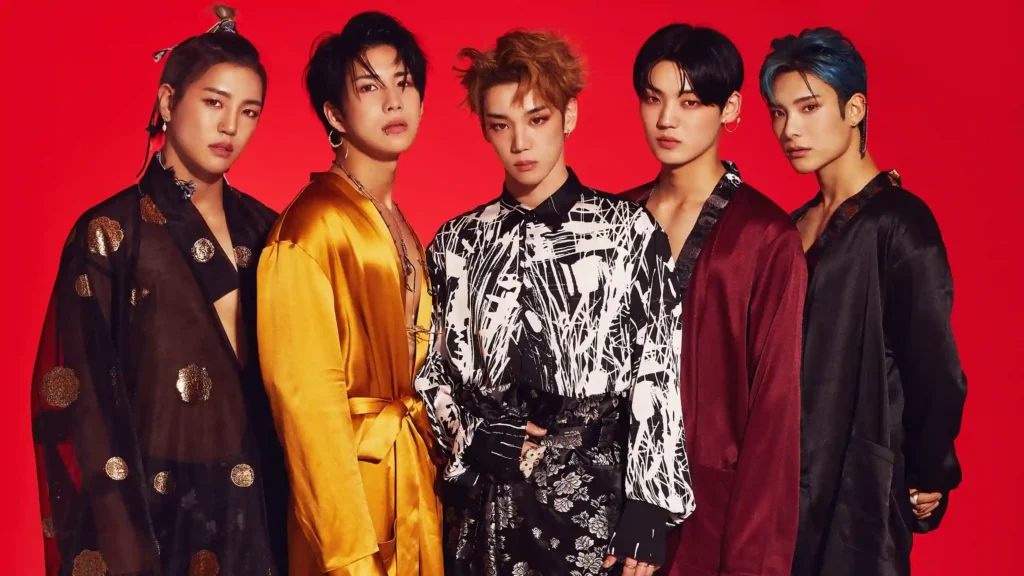
It also added precise storytelling to the music videos and enhanced fan engagement across various platforms for the K-pop groups. In this article, we will discuss the key concept of visual aesthetics in K-pop, its role, elements furthering it, and more such topics.
Table of Contents
Visual Aesthetics in K-pop: Key Concept
Visual aesthetics have a prominent role in the K-pop industry, as the South Korean music and drama community has a high standard for beauty and fashion appeal. If you notice for a moment, the music industry is very specific about the visuals of its actors and idols. It is like having an eligibility criterion to get into the industry. As a concept, visual aesthetics refers to a set of principles of beauty, style, and fashion choices applied to visual elements to create a pleasing and sensory experience for consumers.
In K-pop, music agencies bear the responsibility to curate and find visual aesthetics for the larger consumers of music and K-pop. Companies organise talent hunts, survival shows, and on-street auditions to find idols fitting the objective standard and enrol them in the trainee centres to refine their attitude, performance, and visual appeal. However, visual aesthetics are not limited to K-pop idols but extend to video, cinematography, and music production. If you wonder how? Let me walk you through the process once.
To maintain visual aesthetics in a music video (MV), the team ensures the visual alignment of colours, composition, layout, lighting, VFX in video editing, text and font used in the video, and other related elements to influence the perception and mood of the audience.
For You: Wanna One’s Yoon Jisung Shares Skincare Tips
Why Visuals Integral to K-pop Industry?
Visuals are not just integral to the K-pop industry, it is something that is deeply rooted in South Korean culture. In the country, almost everyone has that clear skin, sharp features, and slim body. Therefore, they admire and look for specific features before choosing their idols and favourite artists. So we can say that visual aesthetics for K-pop idols is important to influence and attract fans and the audience.
However, it’s not just that. In the evolving K-pop landscape, every trainee and debutant gets the same lessons and training from the major training centres and music labels. After the training, they master the art of singing, have nearly perfect vocals, can dance well, and express on stage like no ordinary individual ever dreamed of.
This will make all the K-pop idols identical and xerox copies, if you think that, yes, you are somewhat right. But there is a tiebreaker on the scale, and it is artists’ visual aesthetics. An artist’s visual appeal generally makes them different from other idols. For instance, BlackPink Lisa’s signature bangs make her stand out from other K-pop idols and have fetched a massive fanbase with more than 100 million followers on Instagram alone.
Moreover, agencies give primacy to auditioners with an effortless attitude, visual appeal, and talent for the selection to the trainee program. Why do they do so? Is talent not enough? Is music not sufficient? In short, music and vocal clarity are basics, and one must have some knowledge about them, but visual aesthetics are important for performance and marketing, which generally decides the conversion of a trainee into a debutant as a solo act or in a K-pop group or band.
In digital media, first impressions are the last impression. If your first impression is subdued, then you may not get enough chances to improve that image and eventually be sidelined by the fans and netizens. Therefore, agencies, like Big 4, try to select candidates with that zeal and visual appeal, which will be helpful in marketing and maintaining public relations at later stages of launch and promotions. Before discussing the lengths of visual aesthetics in K-pop, let’s just have a quick look at the evolution of visual aesthetics in K-pop through different K-pop generations.
Evolution of Visual Aesthetics in K-pop Through Generations
K-pop First Generation (1990s to Early 2000s)
The first generation of K-pop marked the onset of the Genre in South Korea, with many agencies just emerging to recruit trainees and debut new K-pop groups into the market. Seo Tajji and Boys, a K-pop boy band, are said to be the pioneers of modern K-pop and are widely credited with the visual aesthetics and fashion zeal, along with SM Entertainment’s first girl group, SES.
90s K-pop style was dominated by a denim wardrobe with leather jackets for the boys, more of a streetwear fashion, while the girl groups represented much more feminine and lighter themes with pastel colours, dungarees and sports wear. Moreover, Seo Tajji and Boys popularised the hoodie, T-shirt, cap, and beanie, and in turn, started the K-pop scene dominated by casual fashion.
Most of the K-pop groups, like H.O.T. and SES, embraced coordinated clothing to establish a connection with group members and portray themselves as one and lay the brand identity of the group. When it comes to hair, spiky hair was the norm for the male idols with highlighted colours, while female idols were known for their crimped hair with thin eyebrows. This being said, music production was at its nascent stage, trying to copy Western music videos. As a result, this phase is marked by fast-paced edits and basic lighting with a normal studio setup. All this was substituted by the strong dance skills of the K-pop idols.
For You: 10 Most Expensive Outfits Worn By K-pop Idols
K-pop Second Generation (2000s to Early 2010s)
The second generation fashion was marked by colourful skinny jeans popularised by both girl groups and K-pop boy bands equally. There were no high-waisted shorts and pants for the female idols back then. All the K-pop female idols flaunted their low-waisted jeans and shorts on the stage. This concept was complemented with heavy layering of shirts and other clothes, which adds a touch of visual aesthetics to the idols’ dressing and fashion.
The hairstyle in vogue was thick, full bangs for female idols, and the idols coloured their hair; however, the colours were not tacky but closer to the natural hair colours. Western outfits of celebrities like Madonna, Michael Jackson, Cindy Ropar, and Lady Gaga influenced the way second-generation K-pop idols dress and present themselves to their fans back in South Korea. For instance, Lady Gaga’s fashion choices had a direct impact on the K-pop group 2NE1.
Groups like Big Bang brought in the luxury streetwear concept and stressed individual identity, abandoning the first-generation idea of visual synchronisation. Moreover, K-pop girl groups like Girls’ Generation and KARA popularised the cute concepts in the market. Music videos also got an update with larger music budgets, narrative storytelling, and advanced lighting in the music videos. Slim body trends also find their origin in the second generation of K-pop and are popular to date in the industry.
K-pop Third Generation (2010s)
The third-generation K-pop visual aesthetics revolve around luxury branding and high-budget music videos. During this period, music companies focused on luxury branding and high-end visuals for both music videos and K-pop idols. For instance, BlackPink emerged as one of the most popular K-pop girl groups with luxury fashion culture and brand deals. Recently, BlackPink Lisa at the Met Gala 2026 showed the visual aesthetics of the K-pop industry.
Social media platforms like Instagram and YouTube have popularised fashion trends and connected idols directly with their fans. Therefore, K-pop idols are now brand-promoting sources and influence people’s fashion choices and aesthetics with a post on their Instagram. Other K-pop groups like BTS, EXO, Seventeen, TWICE, etc., have all impressed with their fast fashion choices, like how they go from skinny jeans and colourful outfits to baggy clothes with more subtle colours. This visual transformation has something we should truly admire.
For You: (G)I-DLE’s Soyeon Criticised For Promoting Eating Disorders
Though there’s an element of cultural hybridisation in the visual choices and how they developed and changed over time. At present, we can see the influence of Western popular music aesthetics like hip-hop and EDM, luxury aesthetics, along with streetwear culture, on the third-generation K-pop groups and idols. In my opinion, BTS V is one of the best-dressed idols in the K-pop industry for the reason that he maintains himself, the choice of colours and outfits, and the visual symmetry he brings to the wardrobe is just pure aesthetics.
K-pop Fourth and Fifth Generation (Present)
The AI and social media culture entered the chat in the case of fourth and fifth-generation K-pop groups. Virtual characters found their way in the K-pop industry, and the K-pop girl group Aespa became the pioneers. The AI counterparts are called “ae” and focus on metaverse storytelling and cyberpunk-themed visuals with neon lighting, dense visual effects and a blend of K-pop and gaming.
This AI Imagery is paired with short-form content and fan edits on various social media platforms. The power of short-form content was unleashed by the popular app TikTok. TikTok gave a new dimension to online content, and many K-pop groups popularised through their TikTok videos, and now Instagram reels. This era includes well-known groups like Aespa, IVE, Stray Kids, NewJeans, and more. This K-pop era is also marked by personal branding and influencer culture at its peak.
K-pop Visual Aesthetics Elements
K-pop Fashion and Wardrobe
The K-pop fashion trends have a great influence on the visual aesthetics of the K-pop idols. This includes the outfits idols wear on stage and the high fashion trends they promote on the internet. For this reason, luxury brands like YSL, Chanel, Louis Vuitton, and more have major collaborations with K-pop idols for their brand endorsement. Visual aesthetics of K-pop idols have enhanced over time from the skinny jeans era to high fashion aesthetics; it has come a long way, and so have the fruits of it. Today, BlackPink has a strong presence with the luxury fashion houses and G-Dragon and BTS V have emerged as global fashion icons for their visual aesthetics and fashion choices.
Production Changes
The music video production has got an upgrade with the incorporation of visual storytelling, luxury branding, and symbolism. The K-pop video production is no longer high-paced music videos with idols dancing synchronised dance moves. Instead, it has updated to more visually appealing videos with carefully chosen colour palettes, a visual narrative connected to the K-pop groups’ theme, and high-end luxurious backgrounds with premium clothing for the idols. Music companies make sure to invest in high-quality videos and the luxury aesthetics of the K-pop groups for the sake of endorsements and brand integration. These videos are pieces of cinematic storytelling that appeal to the people on YouTube and other video platforms.
Beauty Standards in the Industry
I don’t know how many of you have heard the term K-beauty, but let me tell you, it is booming across the world right now. The K-pop industry is set with its skin care and slim body aesthetics; it has become the dream for people outside Korea to achieve that glass skin at least once. Though the K-pop beauty does not end on this, but have a long history from the first generation till the fifth generation, and more. BlackPink Lisa’s signature bangs and short hairstyles of multiple K-pop idols like Eunha and Jihyo have influenced many to do the same. However, these K-beauty standards appear unrealistic due to their aggressive rules and dieting plans.
Choreography and Performance
As per my observation, K-pop idols have a set of pre-determined rules when it comes to their performance. For a reason, they are too camera-focused and visually synchronised during their performance in concerts. Recently, I attended the BTS ARIRANG in Goyang and was ecstatic about the visual aesthetics of the group on stage. Moreover, they pulled the choreographic synchronisation on stage, which added spice to their performance. Historically, as well, K-pop practised this symmetry in its performances and choreography. The group chooses the lead performers in the group, and everyone follows them on stage while performing, keeping the visual aesthetics intact throughout the set.
For You: Globalisation of K-Pop and the Rise of the Korean Wave (Hallyu)
Visual Aesthetics Shaping K-pop Industry
The visual aesthetics have become an integral part of the industry, as discussed earlier as well. It has helped the industry to grow from a small regional scene to a global phenomenon with the entry of premium luxury brands and global fan communities to back it in the process. Agencies were far-sighted to spot the void in the global music industry and fill it at the right time with young Korean talent. However, the maintenance of visual aesthetics in K-pop is a tough affair, at least for K-pop idols, coupled with strict diet plans, constant communication, and sleepless nights.
The strict part in furthering the visual aesthetics can be compromised a bit in the welfare of the K-pop idols, and it will be beneficial for their health and popularity as well. Moreover, Artificial intelligence and luxury brand integration are expected to keep on defining the visual aesthetics in K-pop for a long time to come in the future.
Frequently Asked Questions
Who are visuals in K-pop?
The visual in K-pop is generally a member of the K-pop group who fits the strict K-pop beauty standard rules, attracts the audience’s attention in the concert, and influences people on Instagram. Some of the examples include BTS V, BlackPink Lisa and Jisoo, and IVE Wonyoung.
Why is there a visual in K-pop groups?
Visuals in every group are chosen to attract people towards their group and gain popularity on their face-card and well-maintained body. Korean people admire beauty, music agencies make the K-pop groups accordingly and at least put one visual in every K-pop group they make.
Who are the big 3 in K-pop?
YG Entertainment, JYP Entertainment, and SM Entertainment were considered to be the big 3 firms in the K-pop industry and ruled the Korean market. HYBE Corporation’s entry in 2020 made the big 4 of the K-pop and now HYBE owns more than half the market share in the K-pop industry.
Why is the maknae so loved?
Maknae are the youth idols in the K-pop groups. They gain attention for their young age and visual aesthetics from the fans. K-pop fans often build the maknae image as cute, youthful, and shy in their minds and therefore love maknae idols so much.
Is Stray Kids bigger than BTS?
No, Stray Kids is not bigger than BTS. BTS has an unparalleled global fanbase called ARMY, which Stray Kids potentially lacks. Moreover, BTS has a larger number of tours and concerts, along with number one on global charts, as compared to Stray Kids.