The role of social media has amplified to such an extent that today K-pop has become a global cultural movement rather than just a music genre. Not only has it extended its impact beyond Asia, but also built a huge fandom internationally, including a wide range of populations in North America, Europe, Latin America, and South Asia. In addition to skills, visuals, energetic stage performances, and the idols’ charismatic presence, strong fan communities and social media platforms have also played an important role in the popularity of K-pop and idols.
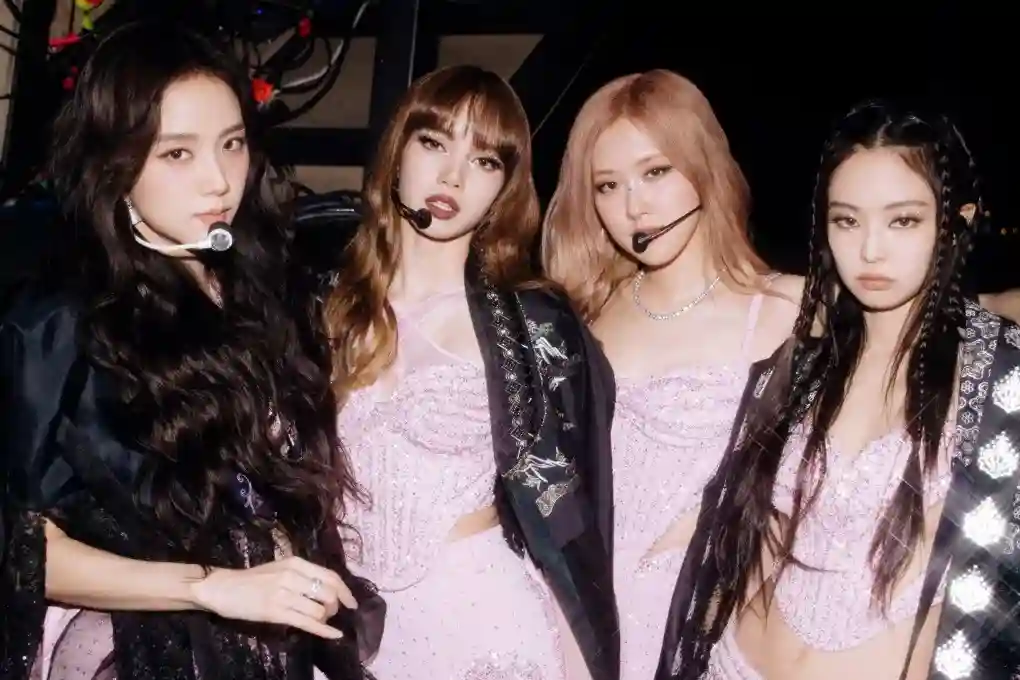
Whether it be TikTok’s short-form videos, Instagram reels, Twitter’s trends, or YouTube’s recommendations, the algorithms have totally shifted the narrative of how the audience is attracted to music and various idols, and the K-pop industry has cracked these social media algorithms like a pro. The article describes the role of social media algorithms and trends in the popularity of K-pop and idols in a detailed manner.
Table of Contents
Social Media In Changing Music Discovery In K-pop
Before this addictive wave of using social media platforms, the music and entertainment industry was limited to television appearances, radio stations, magazines, and physical albums. The factors like geographical barriers and languages also made it difficult to reach out to the international audiences.
Early Western Influence
The beginning of K-Pop music dates back to the post- war period in Korea, around the 1950s. The Korean music was highly influenced by American culture through media and military presence. Various unique genres like jazz, Rock and roll, and pop music were introduced among the youth. Years after, Koreans started blending their local music traditions with American cultural music, which created the foundation of the K-pop music that we listen to today. In the 1990s, J-pop trends reached the Korean markets, leading to a strong connection between South Korea and Japan in the economic and cultural aspects.
For You: Slave Contract: TVXQ and SM Entertainment Lawsuit
Rise Of Seo Taji And Boys
The modern K-pop began in 1992 with the debut of Seo Taji and boys as the group brought something different to the music industry by introducing a perfect mix of hip hop and electronic music. In addition, they showcased their identity with bold fashion choices, energetic performances, synchronized choreographies, and experimental sounds. The upcoming audience resonated well with their styling and hyped them. Eventually, the success inspired companies to adopt “The idol system” focusing on nurturing the skills of the trainees.
Rise Of Entertainment Companies And The Hallyu Wave
The period between 1992 to 19 98 saw the development of major regencies like SM Entertainment, JYP Entertainment, YG Entertainment, etc that shaped the modern K-pop industry while establishing a Korean wave, referred to as “Hallyu”. Even the South Korean Government played a huge role in promoting Korean music, dramas, and films globally through various media methods.
Social Media And Global Expansion
As the years passed, several platforms other than TV, radio, or local media developed, changing the K-pop music industry completely. Through confronting themselves on various social media accounts, beginning from YouTube, the idols overcame limited global interactions. Algorithms automatically recommended music videos, interviews, and performances based on the user’s previous watch history. Also, as the video got likes and views, it was recommended to more viewers, so they can access it too. The recommendation system of social media algorithms changed the dynamic like nothing else and became a reason for K-pop’s expansion globally.
With groups like TVXQ, Baby VQX, and 2NE1 that engaged a huge audience, the algorithm promoted them consistently. The companies behind these successful idols were quick to recognize the strategy for expanding the K-pop industry beyond its connections and traditional exposure. Eventually, high-quality videos, bright colours, constant efforts, and stage performances grabbed immense attention, making K-Pop more like an addiction to drugs. A time came when songs used to top international charts even before they did in the Korean music charts. Soon after, language barriers were also removed through auto-generated captions and an improved digital system.
The New Era In Promotion: TikTok Trends And Viral Challenges
For the ones who know kpop industry over the years, it is no new thing for them if someone says that K-pop has always kept a long distance from social media platforms. The country had its own social media apps, which influenced the idols, artists, and entertainment groups. Similarly, TikTok, during its peak rise, always wanted to enter the South Korean market but always failed. For South Koreans, it was a “vulgar Chinese app” that had no meaning to use.
Soon, during the COVID-19 pandemic, the gap between the platformization system of TikTok and K-pop started to reduce after the Korean domestic market found it a useful way to make its impact international. The reason behind this was that many users all over the world made short-form videos and connected globally with each other.
In 2020, TikTok made a partnership with K-pop entertainment agencies and their idols, announcing a series known as “TikTok Stage” for them. This included various dance choreographies, Catchy books of the songs, and memorable gestures of the idols in short-form videos. Various challenges on kpop Industries were established, making the content more engaging for unknown creators and eventually gaining their attention in the Korean markets.
TikTok trends and viral challenges by the K-pop industry prioritized the algorithm in a way that it intentionally or unintentionally promoted music, dance, visuals, drama, cultural, and beauty content from South Korea. More and more audience was engaged with the challenges, increasing exposure to new songs. As per the algorithm, this repeated engagement started pushing K-pop content as much as it could
As of now, many K-pop songs are hits just because of the global lighting it has achieved with TikTok. The casual listeners, as well, became so attached to K-pop that random trends edit means and controversies fascinated them. What the Agencies thought was a vulgar app turned out to be one of the most prominent reasons for K-pop’s global success. Today, this platform is of key importance for the Newer groups that are rising. The trends and challenges have made the idols and their talents viral, but with that, it has also become a reason for their mental stress and pressure to fulfill the expectations of hundreds of thousands of people who are watching them around the globe.
For You: Where Is Kim Soo Hyun Now? Full Timeline, Recent Sightings and Current Status (2026)
The Power Of Fanbases In Growth And Influencing Algorithms
Apart from their own talents, abilities and strategies, K-pop fandom also plays an equally important role in influencing social media algorithms and promoting their growth. The K-pop industry thrives on engagement and consistency, and that’s where fans play a vital role. If we consider and contrast the random audience with K-pop fans, we can clearly see that, unlike the casual audience, these fans maintain an equally important strategy to hype their favourite idols and, thus, increase their visibility.
Social platforms’ algorithms are known for engagement, which means repeated interaction like likes, comments, and share streaming activities are core aspects of popularity. The fandom understands it well. Fans make sure to organize them with such a strategy that doesn’t trigger the algorithm as spam content and makes efficient trends as well. Generating and using the same hashtags over various platforms and publishing attractive content, hyping K-pop with curious yet excited information makes them trending and global topic.
Fan bases are often regarded as unofficial marketers of the K-pop companies, as the strong relationship between fans and social media algorithms ensures to increase engagement, post the content to a wider audience, and allow more people to know K-pop. Just like idols have pressure to satisfy their fans, similarly, fans too have pressure to support their favourite idols for their success and hits.
Due to this reason, even the idols, agencies behind them, and the whole K-pop industry respect their fans the most. They know exactly how to impress the audience and keep them aligned to generate revenue and grow their business. Every decision taken by these companies always relies on a major thought, saying how it would impact their fandom and allow them to engage more audiences towards the industry.
For You: Aespa’s Ningning And RIIZE’s Wonbin Dating Rumours: New Findings And Background
YouTube, Visual Culture, and the Global Expansion of K-pop
Thousands of artists come forward and represent their own community with the same efforts and sometimes even more skilled approaches as compared to K-pop, but they haven’t occupied the same place as the K-pop industry does today. This is not a surprising thing as K-pop understands the value of the high visual industry and uses social media platforms for its sake.
YouTube became an ideal platform for sharing various expressions through videos and merging different cultural communities together. In accordance with this, K-pop grabbed the opportunity and made itself a major contributor to YouTube. As the YouTube algorithms favour those who increase their watch time, replay value and audience retention, South Korean idols were a perfect match for this.
These idols trimmed over 169 billion minutes through their videos in just the second half of 2021, accounting for 81% of YouTube’s consumption. It was through live-streaming gaming, announcing trending challenges related to their new releases and then visual production. As they occupied a strong place on YouTube, fans and other creators often rewatched their videos to analyze core concepts and hidden knowledge behind them, which eventually gave a boost to their channel’s algorithm, giving them more reach.
Several reaction videos also surfaced, where YouTubers all over the world reacted to the industry’s new launches and paved the way for more users to recognize K-pop and its culture. Not only did K-pop receive appreciation, but criticism also came its way. For the industry that was already well established, it was nothing but one of the aspects which would help them gain popularity and make them known to more people. From the very beginning, K-pop idols were sure that they had the ability to conquer the entertainment industry like no one else and through social media algorithms, they made it possible as well.
Another major reason for its growth was dance practice videos that the companies started uploading. For everyone, it was a new concept where they could learn dance tutorials of their favourite idols online. It increased their reach as well as made people rewatch the videos more frequently. The audience did not realize it was a way for them to maintain consistency among fans and approach more people.
Soon, the unrealistic beauty standards and aesthetic visuals of K-pop female idols surfaced online, paving the way for the industry to optimistically share their hidden secrets and make the world lean towards them even more. With the uploading of various videos related to beauty standards, many K-pop channels arose and became Central to marketing. YouTube is still one of the strongest drivers of popularity and globalization in the K-pop industry. It helps them to rise internationally by making random, visually engaging and strategic content that can be accessed wherever someone wants to.
Instagram, Social Relationships, and Idol Branding
After TikTok and YouTube became famous, the next game was Instagram, which is a similar social media platform for building a strong relationship between fans and celebrities online. K-pop used Instagram to strengthen the already built relationship, and took it to the next level by showing the fandom their favourite idols’ posts, behind-the-scenes looks, travel moments, photos with fans, workout routines, food pictures, and other personal updates related to them.
After the idols made a global reputation, they needed to maintain consistency and keep the audience engaged. through social media apps like Instagram, Bubble, Weverse, the idols appeared on live stream, having real-time interaction with their fans, stories and other short clips. Also, this strengthened the Industry’s way to announce a comeback with an emotional warmth.
Apart from enhancing their influence and delivering consistent content to the fans to keep them engaged, this approach helps the industry to feature their idols as brand ambassadors for promoting various brands. Now, K-pop companies are more cautious towards online identities, so they might not harm or hurt any community unintentionally. By featuring several brands and maintaining a partnership with newly emerged MNC‘s They achieved their last goal of K-pop idol branding. Influencing K-pop culture through different global brands intensified the impact of the industry on Idol culture.
For You: How Music Companies Monetise K-pop Idols: The business of K-pop
This approach of being active all over the social media platform and accessing algorithms wisely made it possible for South Korea to gain a greater visibility while creating a cycle where its idols continue to dominate Global markets and online platforms. Sometimes it can be difficult for the creators to entertain and remain active throughout their hectic schedules, but still they do so as they are forced by higher agencies to maintain a consistent online presence, which often blurs boundaries between the transparent interaction of fans and Idols.
The Dark Side Of Algorithm-driven Popularity
No doubt, social media platforms have marked a prominent way for K-pop and its idols to establish themselves and achieve global success, but as we say, there are two sides to every story; similarly, this algorithm-driven popularity has its dark sides too. With the increased usage of social media for fame, the idols have also faced immense pressure, stress, hatred and several controversies. Algorithms focus on engagement over anything else; they do not care whether the content has any negative impact or can be critical of the idols. This causes controversies, outrages, and emotional reactions surfacing online based on misinterpreted or negative content.
The negative content, comprising online controversial debates and rumors spread more faster than the positive influence ever does. The rumours surfacing on online platforms include dating controversies, fan wars, discussion of legal disputes, and so on. This strategy attracts quick clicks and comments that target the idol’s character and reputation in a second, destroying their future career. Mass criticism can affect the mental health status of the idols, forcing them to either quit the industry or their lives.
In addition to online criticism that K-pop faces, comes the pressure from the agencies under which artists work. The agencies force them to maintain a clean and polished image, sharing appropriate and company-approved content only. The idols cannot handle their personal lives on their own, cannot share their own original thoughts without the authorities’ approval, and are forced to follow these strict guidelines.
This has pressurized the idols in every possible way; if they post something inappropriate or something that causes netizens to step in their career is ruined, even if they post something on their own, the company backlashes on them, and overall, they have to deal with hectic and strict routines. Algorithms are about unrealistic expectations that the audience has of their favourite idols. If the content dosnot appeals them, a quick downfall can shift the narrative of the audience from them to be their most favourite to hated. Industry craves new debuts every month to maintain consistency. If the old idols do not keep up with the fans’ expectations anymore, they are left unseen or unhired.
The Future of K-pop: Digital Era And AI
K-pop, which once kept miles of distance between itself and social media, is today seen as a keen user of it. No fan messaging or interaction application is unknown in the Korean pop industry today. Today is a digital age, and technology is continuously evolving as the days pass. In this situation, it is interesting to see how K-pop and the idols will be making strategic use of this as well.
The use of AI has already started by companies. Personalized recommendation systems, virtual idol copies, ai driven marketing are finding their place after the K-pop artists have analyzed AI’s importance. AI is becoming normal in the industry rather than just an option. Recently, the industry launched the song “Maestro” through its well-known artists’ group, Seventeen. The song is a perfect example of how AI can amplify the music and entertainment industry in the near future.
Another example comprises a unique concept evolved in the K-pop to neutralize the reactions in bisexual or related communities. The group “MPREG” is built around the concept of male pregnancy, where AI idols have been seen, and the audience, too, is excited to see what new they will bring to the table. The future of K-pop is no longer limited to algorithms, as it has started using AI tools and virtual assistants to step up the game already.
For You: Corporate Conflicts in the K-pop Industry
Role of Social Media Algorithms and Trends
K-pop has developed into an international culture with its continuous connection to social media engagement. Platforms like YouTube, TikTok, Instagram, and Twitter and the strategic moves made by the companies of K-pop have solidified their place and attracted a huge amount of audience. K-pop has an advantage over all the other genres as it has made an efficient use of social media platforms as and when needed in such a strategic way that its influence is seen all over the globe. K-pop fans do most of their work online, with every tweet and post promoting their idols.
However, these online presences can be considered negative for K-Pop idols and K-pop’s fanbases. Since K-pop idols are constantly being streamed and critiqued, there is an unhealthy amount of pressure on them that can have an impact on their mental health. With so many K-Pop groups, there is a lot of competition among idols and their fan bases. The social media and K-pop industry work together; with that being said, there’s no doubt that social media is an asset to the K-pop industry.
Frequently Asked Questions
What social media platform do K-pop idols use?
Instagram, Weverse, YouTube, TikTok, X (Twitter), Bubble, and other Korean messaging apps are prominently used by the older idols. This creates a unique environment where idols can easily interact more directly and personally with their fanbase.
Do K-pop idols use social media?
Many K-pop idols have Instagrams, Bubble, Twitter accounts, etc. It’s just mainly older ones. However, young idols are often not allowed to have their own social media due to companies fearing they will post something they shouldn’t and end up in a scandal.
Who owns the platform Weverse?
Weverse is owned by HYBE Corporation, which is a South Korean entertainment company, through its technology subsidiary, Weverse Company (formerly beNX). It is a social media platform designed for Weverse Company (formerly beNX). It is a dedicated platform designed for artist-to-fan communication, content streaming, and merchandise sales (Weverse Shop).
Which apps do Koreans use?
KakaoTalk is one of the most popular instant messaging apps in South Korea, and since its debut in March 2010, the service has captured around 90 percent of the local market. Apart from these, apps like Weverse, TikTok, and Instagram are also highly trending in Korea.